How do you evaluate the materials most commonly used in green building, such as adobe, straw, wood, stone, bamboo, or brick?
Regarding the materials most commonly used in green building, their choice depends on the project’s use, location, and the balance between surface area, energy efficiency, and natural materials, especially considering the clients’ budgets.
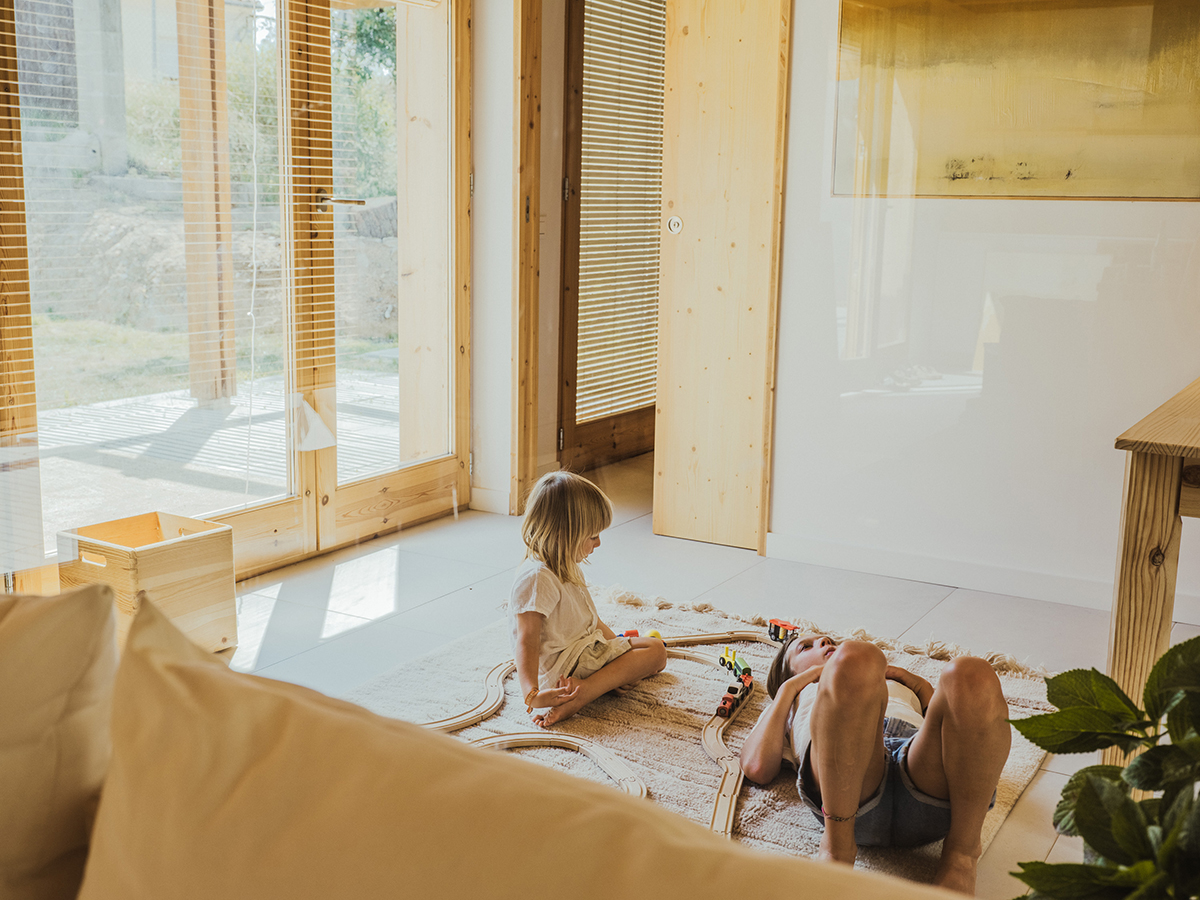
Wood, although very fashionable, has limitations depending on its origin. In Northern European countries, with forests of large, straight trees, its availability facilitates its use; in Spain, local wood tends to come from small, twisted pines, so much of the wood used comes from Northern Europe, which may not be ecological due to the CO₂ emissions from transport. Furthermore, wood does not accumulate heat, so in a Mediterranean climate, it needs to be complemented with materials that do retain heat to maintain comfort in winter and coolness in summer. Therefore, it is suitable when combined with brick or for weekend homes.
Stone and adobe, including rammed earth walls, have excellent thermal properties, accumulating solar heat in winter and maintaining coolness in summer. Their installation requires specialized and artisanal labor, which increases the project cost, although they offer a very efficient and healthy result. Straw, as a non-structural insulator, requires specialized knowledge and protection from moisture; otherwise, it can rot, so there are more effective alternatives, such as cork. Natural bricks, such as thermo-clay, are another very interesting option: they are natural materials whose installation is no more expensive than other non-ecological materials and they allow for good thermal performance. Finally, bamboo, although it has potential in certain contexts, has limited use in our country and does not always justify the investment compared to other materials better adapted to the climate and local availability.
In short, there is no “perfect material”: each must be evaluated according to its function, climatic conditions, thermal efficiency, and the sustainability of its origin. Green building consists of balancing these factors to achieve healthy, efficient, and environmentally friendly homes.