Materials
Building with Earth
How can we build today with a material that has been part of construction history for thousands of years?

Earth as a Building Material
Building with earth is a fundamental element that has served as a foundation for humanity throughout the centuries and represents an essential biomaterial in the pursuit of sustainable and environmentally friendly constructions.
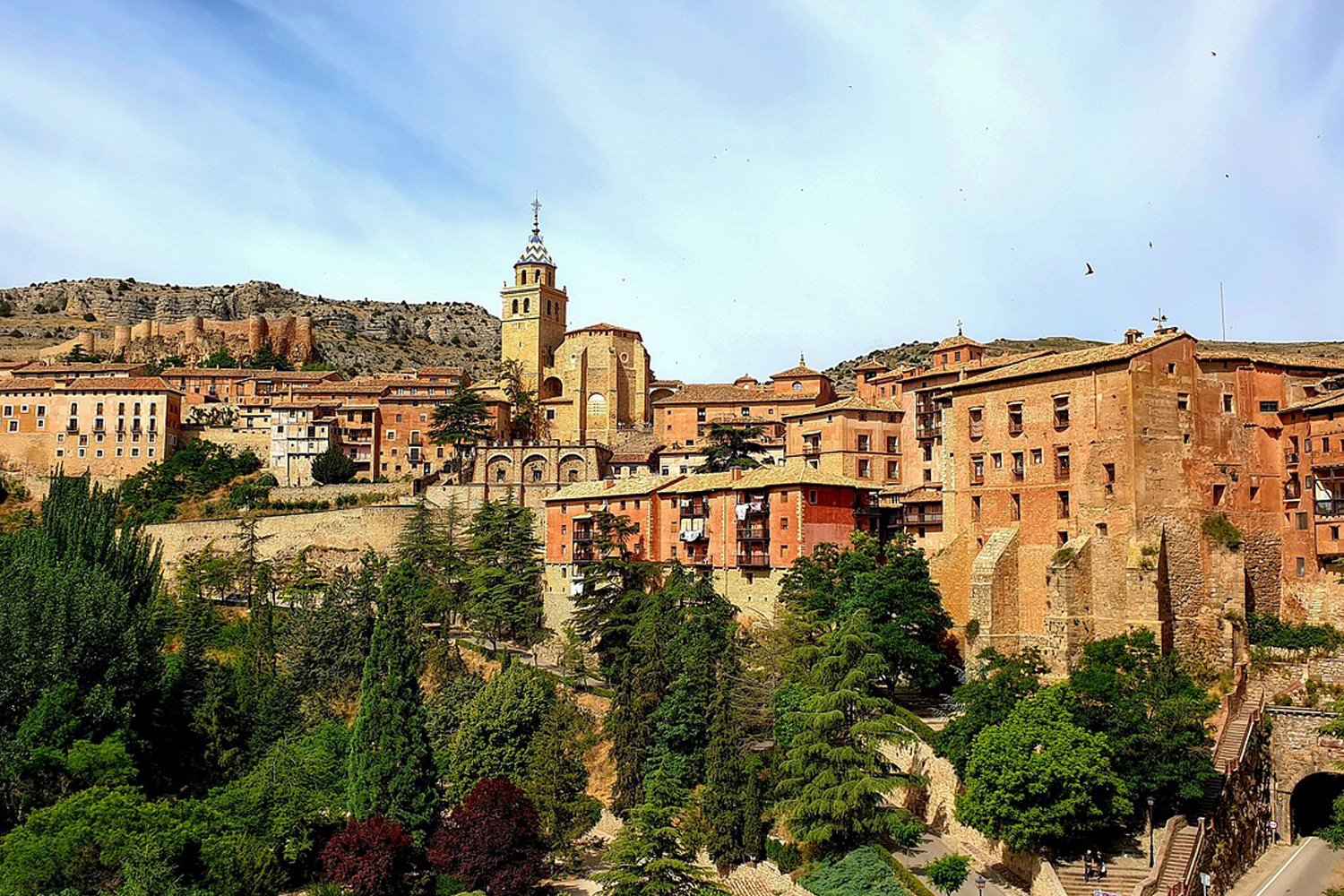
From the Pantheon in Rome, over two thousand years old, to more than 180 sites considered World Heritage by UNESCO, earth has been the cornerstone of traditional architecture worldwide, including most of the traditional architecture of the towns in our country, such as rural farmhouses made of rammed earth or earth mortar with lime, or a good part of the village houses in our country.
Although earth has been an undisputed protagonist in construction throughout history, its use declined during the last century due to the rise of fossil fuels, which facilitated the large-scale implementation of cement as a substitute for lime and reinforced concrete as a substitute for earth mortar—a material that allows for quick construction with little experience and can handle greater structural demands than earth.
However, this change is having severe consequences for the planet. Currently, cement is responsible for 8% of global CO2 emissions and constitutes one of the most polluting industries on the planet, due to its need to be calcined at 1800ºC in blast furnaces that use fossil fuels, and because the calcination process itself emits lime to produce cement, generating carbon emissions in the reaction.
Given the climate emergency we are experiencing, building with earth is undergoing a revaluation as a sustainable construction material, evident in contemporary projects such as the award-winning construction of prefabricated earth blocks for public housing buildings carried out by IBAVI in Ibiza. [1]
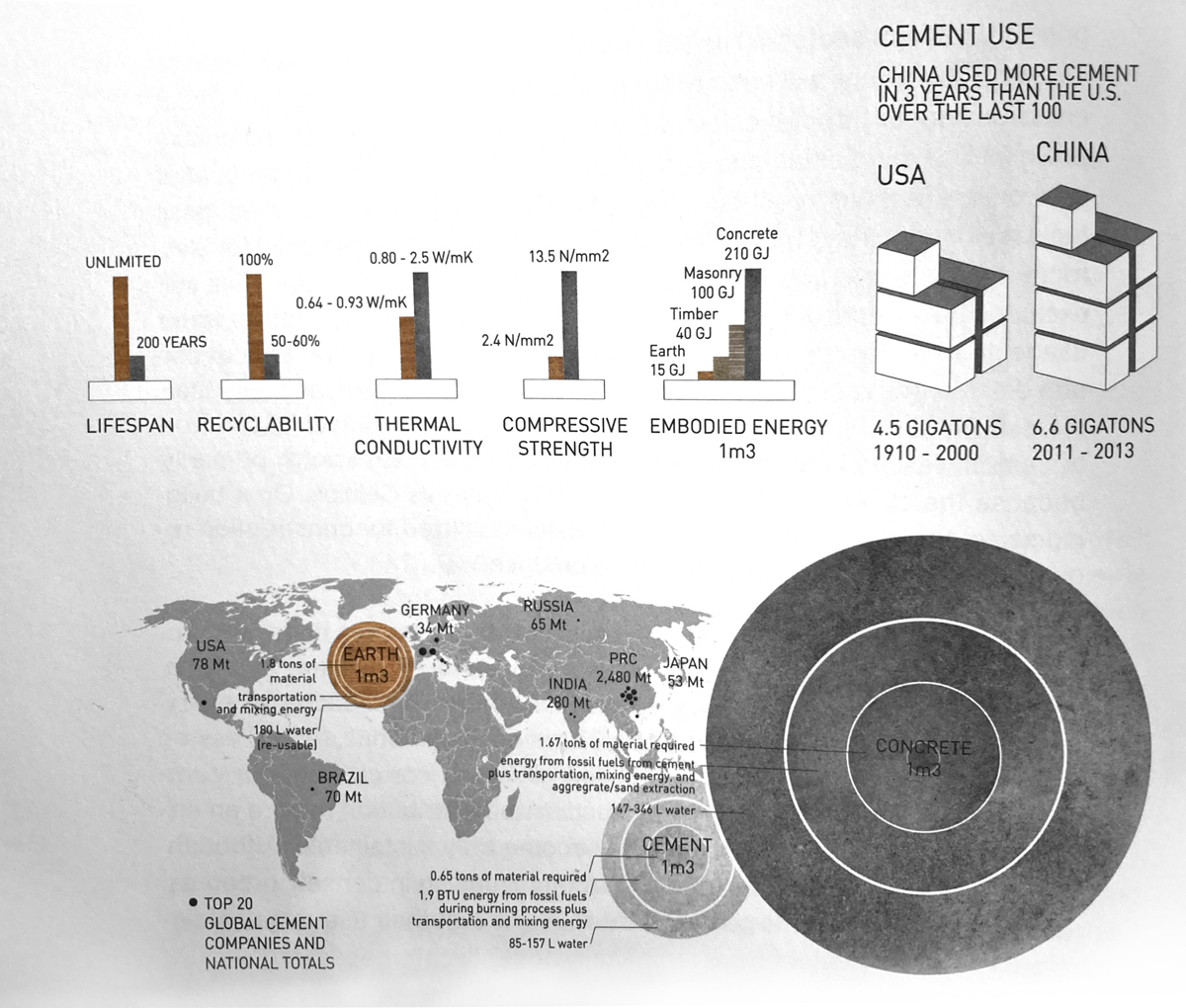
Comparative chart of ecological footprint use for cement, concrete, and earth, service life, recyclability, thermal conductivity, resistance, embodied carbon. [5]
This large-scale recovery of its use not only represents a return to architectural roots but also a response to the urgent need to build with decarbonized materials that significantly reduce the embodied carbon of buildings.
While replacing concrete in large engineering works remains unfeasible, there is nothing today that prevents the use of earth as a construction alternative for both single-family and multi-family homes up to 5 or 6 stories high, as well as small and medium-sized buildings.
For this reason, this article aims to highlight the value of earth as a biomaterial in construction, emphasizing its advantages in terms of bioclimatic performance and health for people and the planet, detailing all the types of earth construction available today.
Advantages of Earth as a Building Material
Abundant: Earth stands out as the most ecological and abundant among natural building materials, ensuring an environmentally friendly option in virtually all locations and climates.
Minimal impact: Being a material with less transformation means it has a lower carbon footprint, and being local and abundant, also a lower ecological footprint.
Seismic Resistant: Unlike other constructions, seismic resistance in earth buildings does not depend on the material itself, but on the design and dimensioning of the structure, providing a safe option against seismic events [2].
Structural resistance: Earth construction boasts good structural resistance based on particle stacking, frictional forces between them, capillary cohesion, and cohesion due to electrical forces [3].
Indoor environment health: Earth buildings ensure a healthy indoor environment by not releasing toxic products or volatile organic compounds (VOCs). The granular and porous structure of earth makes it a breathable material and gives it hygroscopic properties that allow for natural humidity regulation, contributing to a more comfortable indoor environment.
Thermal inertia: Heavy and dense earth walls possess high thermal inertia that slows down temperature exchanges between the interior and exterior, providing cool environments in summer and temperate ones in winter.
Thermal insulation: Earth offers good thermal insulation, contributing to the energy efficiency of constructions, due to its porous and granular structure which provides resistance to heat flow, thus maintaining stable indoor temperatures.
Acoustic insulation: The compactness of earth walls acts as a barrier to external sound emissions and absorbs internal noises, improving the acoustic performance of spaces.
Fireproof: Earth is a fireproof material due to its intrinsic properties, its non-combustible nature, and its ability to withstand high temperatures, making earth construction completely safe in case of fires.
Comfort and aesthetics: Earth construction combines a minimalist aesthetic with the warmth characteristic of the material, offering a wide variety of natural colors, from dark gray to bright yellow, passing through reddish tones… resulting in multiple design possibilities and shades.
Neuroarchitecture: Earth, as a natural material, contributes to neuroarchitecture, providing a warm environment with living textures that promote visual, tactile, and psychological pleasure, integrating harmoniously into its landscape [4].
Resilient: Earth naturally stands out for its resistance and adaptability properties, which translate into greater durability and ability to withstand stresses, maintaining the integrity of constructions over time. Thus, structures built with earth are capable of facing environmental challenges and changes.
Prefabrication: Conceived as the material of the future, earth allows for prefabrication. This construction format positions earth as an efficient and adaptable option, combining the richness of traditional practices with the precision of contemporary methods for project planning, exhaustive testing, and accurate measurement of its qualities [5].
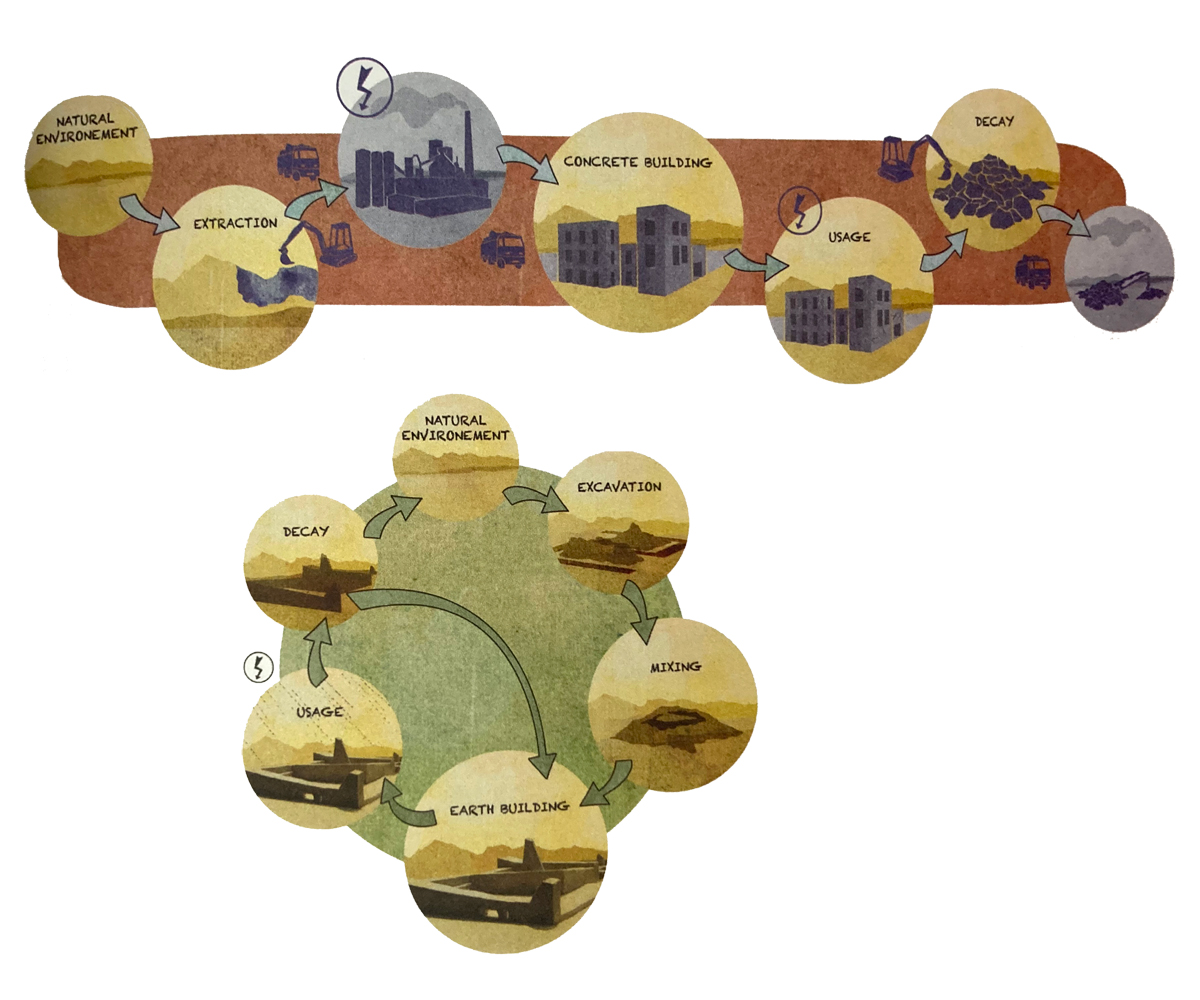
Comparative chart of the life cycle of earth and concrete [6]
Forms of Earth Construction
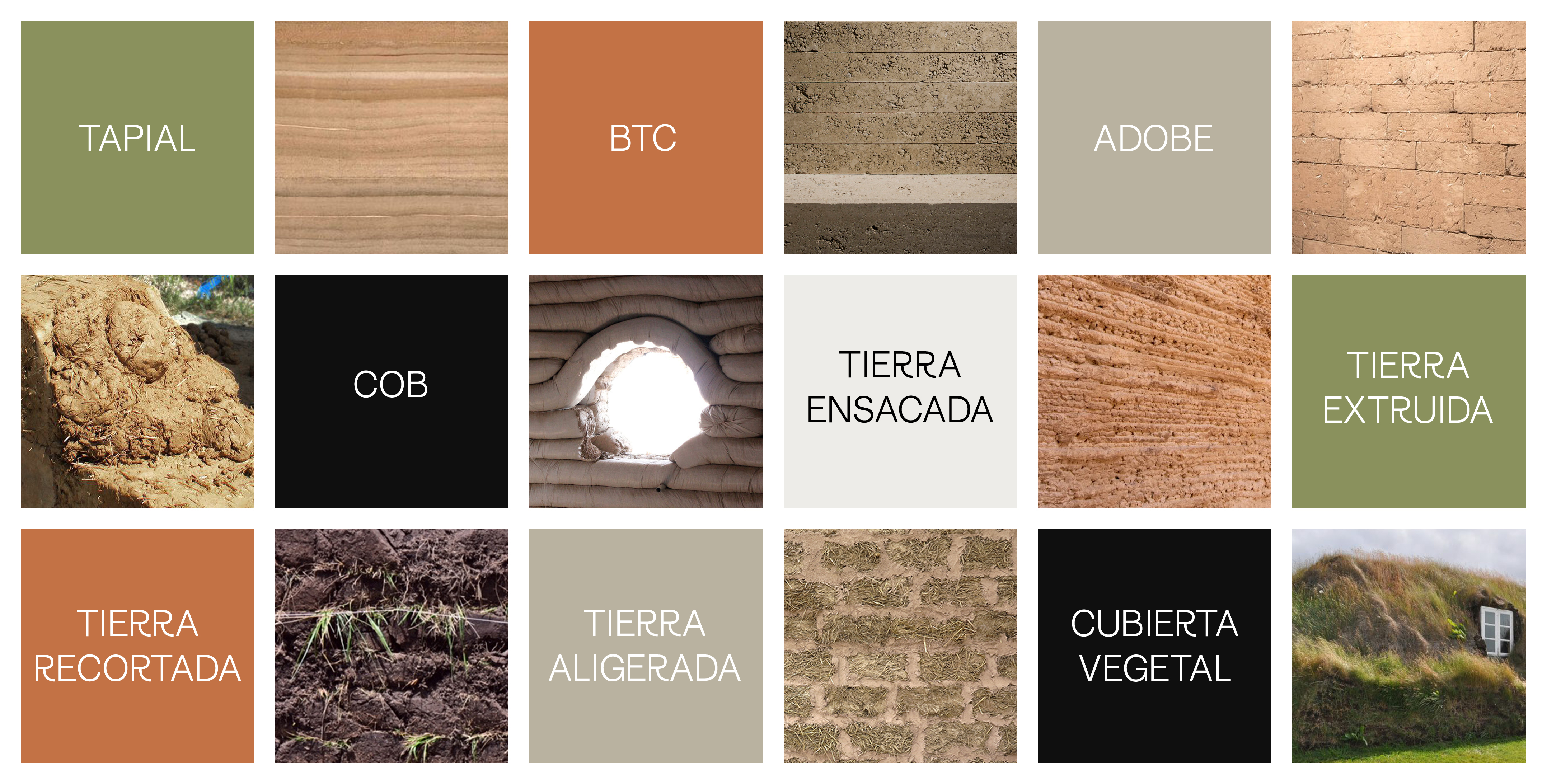
1. Rammed Earth
2. CSEB
3. Adobe
4. Cob
5. Earthbag or Superadobe
6. Extruded Earth
7. Cut Earth or Sod
8. Light Earth
9. Earth Roofs
9.1 Flat Roofs
9.2 Green Roof [7]
Rammed Earth
In Spain, rammed earth construction has been a widely used system since Roman times, gaining popularity and spreading throughout different historical periods up to the present day.
Rammed earth, or ‘tapia’, consists of compacting earth in layers (tongadas) in situ – superimposing horizontal layers of a certain thickness, generally around 10 cm – within a formwork so that, once removed, solid load-bearing walls of pressed earth are obtained.
The basic biomaterial for making rammed earth walls is earth, mixed with water and natural binders like lime, with the option of adding straw or clay to enhance cohesion.
Earth-based rammed earth walls follow the principles of bioclimatic architecture, utilizing local natural resources to meet household needs: insulating properties that promote thermo-acoustic comfort, breathability of the walls that improve indoor air quality, thermal inertia that allows temperature accumulation for long periods and contributes to the energy efficiency of the home, low environmental impact thanks to a composition of minimally processed natural materials of local origin, etc.
On the other hand, it is a construction method that requires specialized labor, which is scarce today, and a long on-site execution time. It works well in the Mediterranean climate as it requires mild climatic conditions – harsh climates, both extreme cold and heavy rains, deteriorate the material over time. [8]

CSEB
The Compressed Stabilized Earth Block (CSEB) represents an innovative construction system that prioritizes the use of earth as the main biomaterial, complemented with sand and clay, and optionally stabilized with lime. This industrialized method involves pressure compaction of the mixture using a hydraulic machine, resulting in earth blocks. Structural resistance is achieved after a drying period, eliminating excess moisture and leaving a compact block with remarkable thermal inertia.
What is remarkable about CSEB is its energy efficiency, as the production of these blocks requires approximately 1% of the energy needed to manufacture conventional bricks. This significant energy saving represents a valuable contribution to the construction sector, aligning with more sustainable practices.
Furthermore, opting for the CSEB system has direct benefits for the indoor environment of the home. The ability to maintain relative humidity close to 50% helps create healthy environments, while the insulating properties of earth as a biomaterial improve both thermo-acoustic comfort and the energy efficiency of the home. Thus, CSEB positions itself as a constructive alternative that not only promotes energy sustainability but also favors habitability and well-being in the home. [9]

CSEB Construction in a House in Serra d’Ordal
At Slow Studio, we recently completed a house in Serra d’Ordal whose construction system consists of structural walls made of lime-stabilized compressed earth blocks in a prefabricated format from the company FetdeTerra, specifically the Tapialbloc product.
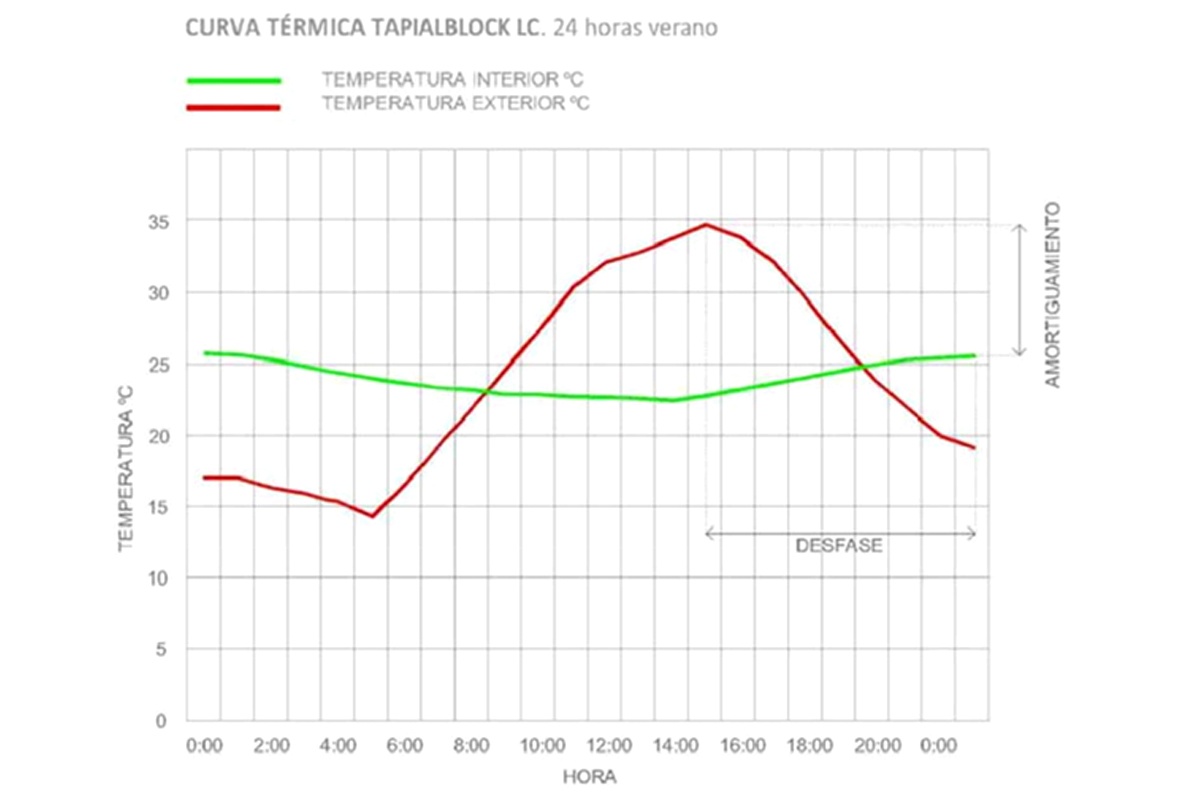
Thus, each block is 1m long and weighs around 60 kg, as it is an extremely dense material, which allows it to accumulate temperature, whether cold or heat. The industrialization of earth in this format allows the supplier to calculate not only the structural resistance of the material but also its thermal damping capacity, as shown in the following graph, making it possible to forecast the energy performance of the home.
Adobe
Originating from the Arabic word “thobe,” meaning mud, the adobe technique has been in use for over five thousand years. Adobe consists of an unfired brick made of mud (clay and sand) and sometimes mixed with straw, sawdust, or manure. It is used in various construction elements, such as walls and arches. Adobe blocks can be made manually or with wooden molds, easily adapting to other materials, and typically have the dimensions of conventional bricks or are slightly taller.
Three main masonry techniques for wall construction are highlighted based on the type of bond: “stretcher bond” for interior divisions, “header bond” for greater thermal amplitude, and “cavity bond” for cold climates, ensuring good thermal insulation by leaving an air chamber between pieces. As mortar, adobe bricks are fixed using a mixture with the same proportions of mud and sand as the pieces were made from.
Adobe constructions offer easily modifiable structures due to their ease of assembly, allowing walls to be demolished or extensions added as needed. Furthermore, lacking an extensive transformation process, they do not require specialized labor and are highly economical, ensuring good thermal performance. In summary, adobe positions itself as a versatile, sustainable, and adaptable material for various construction techniques, representing an efficient and environmentally friendly option. [10]

Cob
In England, the word “cob” is commonly used to refer to rounded masses of earth. This terminology has transcended borders and has spread especially when discussing house construction.
Cob is a building material composed of clay, sand, straw, and common earth mud. Although it shares similarities with adobe in terms of material proportions, its structure allows for the construction of buildings without the need to pre-transform the amorphous material into bricks that would need to be dried. Thus, cob constructions are erected directly from the foundations in single-block walls, stacking balls that form the walls.
Traditionally, the mixture was compacted with the help of oxen in a process called “cobbing.” It is then left to rest in a pre-drying process that gives it the necessary consistency to raise and mold the walls. The adjustment of the walls comes later, adapting them to structural elements such as jambs and lintels and excavating openings like windows.
Earth constructions using the cob system remain strong in humid climates, and their thickness and material offer excellent thermal insulation, maintaining stable indoor temperatures throughout the year. In humid and rainy climates like Great Britain, old cob buildings withstand the passage of time thanks to walls over 50 cm thick. Additionally, cob is a fireproof, seismic-resistant, economical, weather-resistant, and easily moldable material for complex buildings due to its ductility. [11]

Earthbag or Superadobe
According to the RAE definition, a sandbag (saco terrero) is a “bag filled with earth and used to form protective or defensive walls.” The origin of using sandbags comes from their use in military trenches and containment dikes.
In the 1970s, at the University of Kassel in Germany, research began on building walls using textile elements filled with earth. The objective of this research was to construct a housing prototype capable of resisting earthquakes, that was low-cost, and that allowed for construction with an easy building technique. Thus, this was the first time earthbags stopped being seen as temporary construction instruments and were used in permanent constructions.
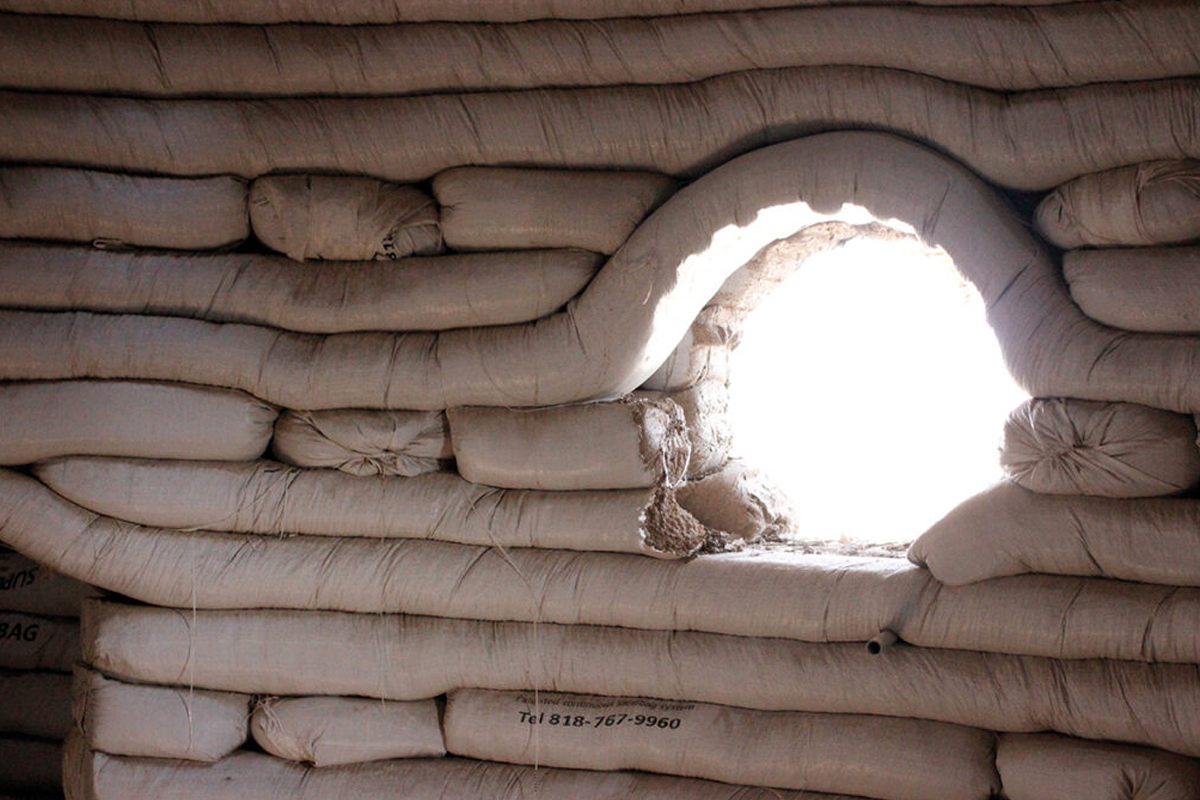
Earthbag or Superadobe represents an innovative form of earthbag architecture, a method that uses long bags made of textile elements, originally jute, filled with local sand and earth and fixed vertically with the help of bamboo poles. To prevent material rot, the jute is covered with several layers of lime paint, which also helps stabilize the surface and waterproof it.
In the construction process, sandbags are filled with moistened earth and arranged in layers or long rolls. The fixing system based on bamboo, or in some cases barbed wire, is strategically placed between each bag layer to act as mortar and reinforcement. The earthbag system can be used to build both walls and structural arches, domes, or vaults. [12]
Extruded Earth
Extruded earth typically involves construction using an extruder machine, a large 3D printer that ‘prints’ walls through an additive method, building layer by layer fed with an earth and lime mortar. This is an innovative system in a very early stage that has the potential to transform the industry similarly to material prefabrication, as it allows for reduced raw material consumption, labor needs, and construction time.
However, it is also possible to consider extruded earth as the extrusion technique used in the manufacture of ceramic bricks or thermo-clay blocks, which some companies have used to produce solid and hollow unfired bricks, with a classic mixture of earth, clay, and stabilizer, which can incorporate sawdust, thus improving the insulating and load-bearing properties of the bricks. These pieces are dried at low temperatures and are similar to those offered by the ceramic industry, especially for interior distribution and wall lining. Furthermore, it is possible to go a step further, as the German company ProCrea manufactures an extruded earth wall, demonstrating the versatility of extruded earth in creating efficient and sustainable structures. [13]

Cut Earth or Sod
Sod construction is an ancient traditional technique carried out mainly in Uruguay. It consists of blocks of earth and grass extracted from the ground, which are then stacked to form walls without the need for drying. The construction process is entirely artisanal and very simple: the material is available on site and only needs to be rearranged and repositioned to serve a new function. Due to its ease of execution, it can be used by unskilled labor and is done with hands and a simple tool, a flat, sharp shovel. It requires no production processes, consumes no energy, and does not pollute. [14]

Light Earth
Light earth construction is a mixed technique consisting of a load-bearing structure, made of wood or cane, where the infill is mud with a high fiber content, almost always straw. Also known as quincha, it is built by creating a framework of interwoven wood or cane pieces with vertical and horizontal elements, which is then covered on both sides with a mixture of mud and straw. It usually has a fine lime plaster finish to create a weather-tight enclosure.
The system results in a flexible and lightweight structure that facilitates assembly, reduces loads on the building, is inherently earthquake-resistant due to its flexibility, and can adapt to various architectural needs. Furthermore, the fact that it can be built using a variety of materials allows for its adaptation to local availabilities. [15]

Earth Roofs
Flat Roofs
The term “terrat” or “terrado” was traditionally used to refer to the flat roofs of village houses, where activities such as hanging out the laundry or meeting with neighbours took place, and which were protected with a layer of compacted clay that ensured waterproofing and provided a firm surface for accessibility.
Green Roof
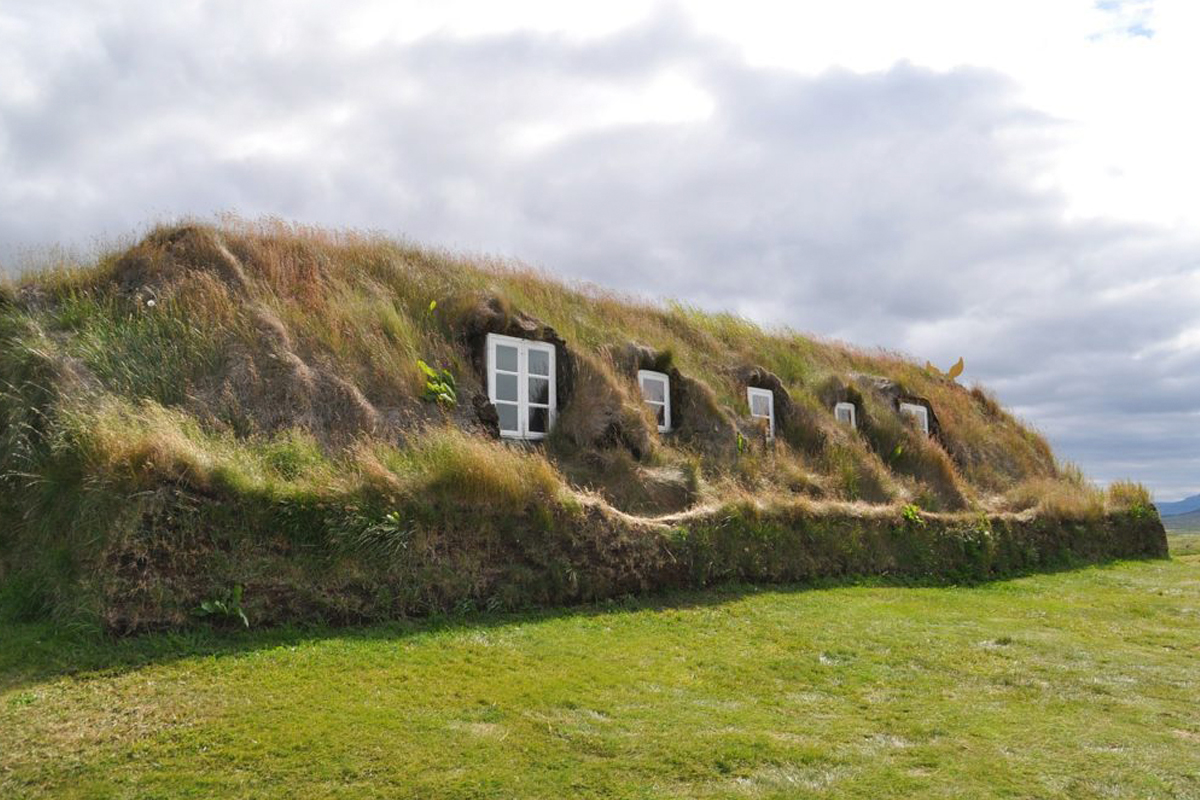
Green roofs green roofs have been used throughout history, even in very cold climates, in Nordic countries. In our Mediterranean climate, there are some examples in vernacular architecture such as the Galician hórreo or the Extremaduran chozo, both examples of steeply pitched roofs for small dwellings.
A green roof consists of a flat roof where, instead of protecting the surface with gravel or paving, it is covered with a layer of earth to which—along with its corresponding anti-root membrane—vegetation is added. Nowadays, houses with green roofs are becoming more widespread in passive construction due to the good thermal performance they offer. The roof is the fifth façade of a building and the one that receives the most sun, so managing to buffer all this heat with a layer of earth and vegetation is one of the best options for regulating the indoor temperature and preventing overheating. [16]