Design Process
Life Cycle Assessment in Construction
Measuring the environmental footprint of the materials we build with

Sustainability has become an essential pillar in the construction sector due to its significant environmental impact. Buildings, in all their phases, from design to demolition, are responsible for a large portion of global greenhouse gas emissions.
In a climate emergency scenario, Life Cycle Assessment (LCA) emerges as a crucial tool for understanding and reducing the environmental impact associated with the materials and processes used in construction. This approach is not limited to calculating CO2 emissions but also considers other factors such as natural resource consumption, impact on ecosystems, and pollutant generation.
For example, when evaluating materials like wood, LCA considers not only the CO2 absorbed during its growth but also the impacts derived from its extraction, transport, and potential chemical treatments. This comprehensive analysis allows for the identification of critical points throughout a building’s life cycle, facilitating informed decisions to reduce its environmental footprint and optimize construction processes.
With more demanding regulations and the incorporation of assessment tools into projects, LCA is not only an advanced technical practice but also a key strategy for advancing towards more environmentally friendly construction.
What is LCA?
Life Cycle Assessment (LCA) is a methodology that evaluates the environmental impact of a product or process throughout all its phases, from raw material extraction to its final disposal. In the case of construction, LCA includes aspects such as material production, transport, construction, building use, and demolition. Its objective is to identify and, subsequently, reduce negative environmental impacts, such as greenhouse gas emissions, natural resource consumption, and soil and water pollution.
EPBD, the Obligation to Calculate GWP
The Energy Performance of Buildings Directive (EPBD) establishes a fundamental regulatory framework for integrating sustainability into the construction sector. One of the most notable new features is the mandatory calculation of Global Warming Potential (GWP) starting in 2028 for public buildings and 2030 for all buildings.
In Spain, this regulation will be implemented through the future update of the Technical Building Code (CTE), which must adapt to comply with European directives. This change represents a transcendental step in the evolution of sustainability, moving from a recommended practice to a legal requirement. [1]
The UNE EN-15978 Standard
The UNE EN-15978 standard specifies the rules for assessing the environmental performance of new and existing buildings. This standard is based on a Life Cycle Assessment (LCA) approach and provides the basis for calculating indicators such as GWP. Additionally, it considers aspects such as resource use, waste categories, and output flows, integrating data from Environmental Product Declarations (EPD) in accordance with EN 15804. [2]
LCA as a Design Tool to Reduce Carbon Footprint
Life Cycle Assessment (LCA) plays a crucial role in mitigating the environmental impact of buildings, especially when integrated from the initial stages of the design process. This systematic methodology evaluates the environmental loads associated with the use of materials and energy in buildings throughout their life cycle. [3]
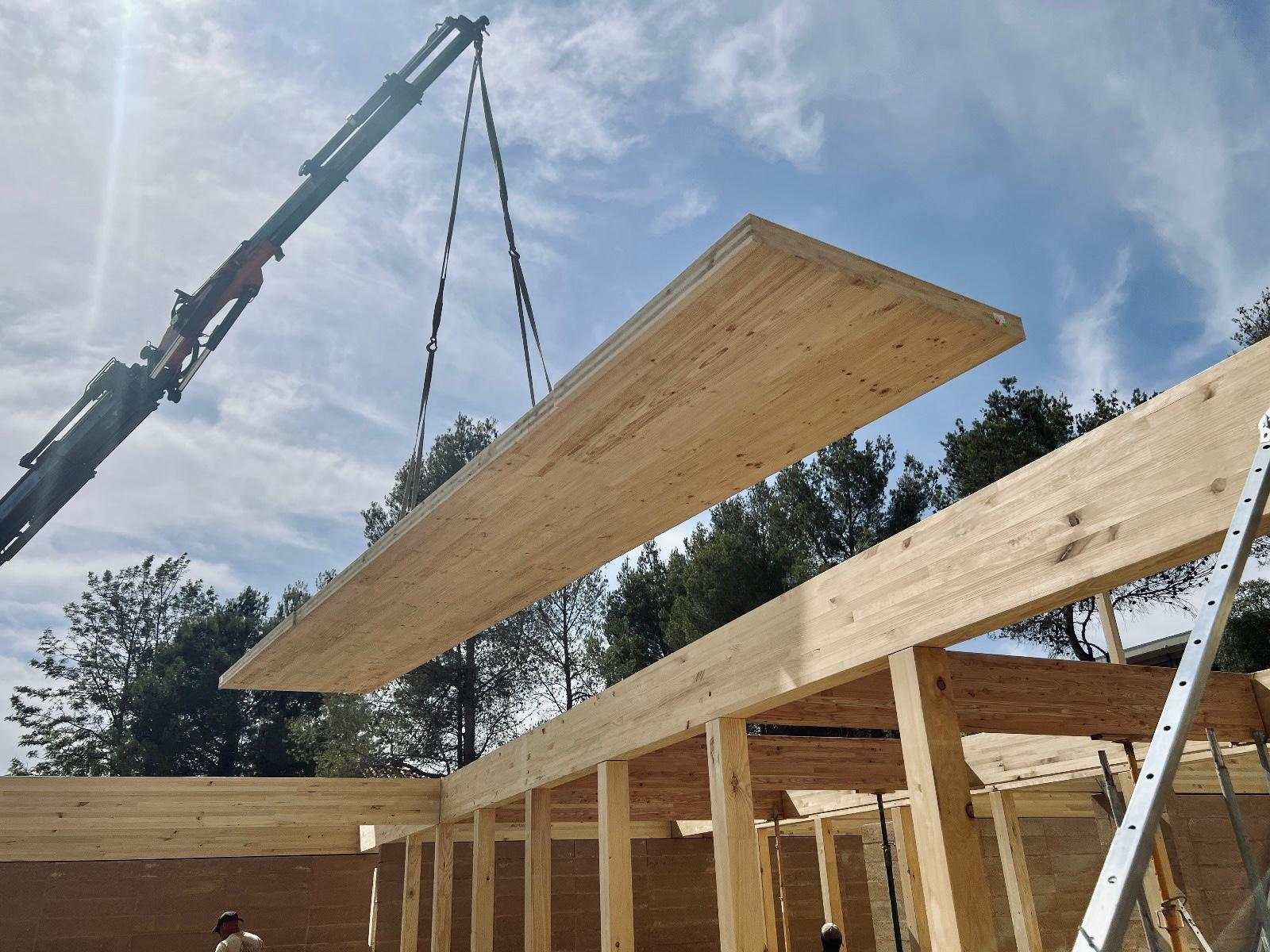
Implementing it from the first steps of design allows for optimizing the project’s environmental performance, adjusting as the design progresses and more precise data is obtained. For example:
- In the initial stages, LCA guides the selection of optimal volumes, forms, and construction systems.
- In advanced phases, it helps compare specific products and refine technical design.
The use of a hierarchical structure to break down the building into systems, elements, and materials facilitates data collection and improves the comparability of results. Furthermore, LCA promotes practices such as design for disassembly and material recycling at the end of the building’s useful life, aligning with circular economy principles. [4]
Levels, the European Framework for Sustainability
The European framework Levels is a key tool developed by the European Commission to integrate sustainability into the construction sector. Designed as a common assessment system, Levels allows for measuring and managing the environmental impacts of buildings throughout all phases of their life cycle, from initial design to use and demolition.
Levels uses a set of six main assessment areas, addressing fundamental aspects of environmental impact and building performance:
1. Life cycle carbon emissions: Calculates the total impact, from emissions generated during material production to the use and demolition of the building.
2. Resource and water efficiency: Evaluates the consumption of natural resources such as energy and water, promoting their efficient management.
3. Indoor health and comfort: Measures aspects such as indoor air quality, natural lighting, and thermal comfort, considering both sustainability and occupant well-being.
4. Life cycle costs: Includes not only initial construction costs but also those associated with building maintenance and management.
5. Climate change adaptation: Assesses the building’s resilience to extreme weather events, such as heatwaves or floods.
6. Circular economy: Promotes design for disassembly and recycling, reducing waste generated and encouraging material reuse.
One of the central pillars of Levels is the integration of Life Cycle Assessment (LCA) as a tool to evaluate carbon emissions and overall environmental impact. This allows professionals to objectively compare different design options and materials, identifying the most sustainable solutions from the project’s inception. [5]
EPDs and Key Databases for Rigorous LCA
Databases are fundamental in calculating Life Cycle Assessment (LCA), as they compile the environmental impacts of construction materials throughout their entire cycle. Environmental Product Declarations (EPDs) are crucial in this process, as they detail the environmental impact of materials, allowing for precise evaluation.
An EPD is prepared using reference data on materials, which are added to the total LCA calculation, making the quality and accuracy of the information essential. The Swiss database Ecoinvent is a recognized European reference for its rigor, adopted by institutions such as ITEC. These databases provide key information on the environmental impact of materials, facilitating more sustainable decision-making in construction.
It is essential for professionals in the sector to use reliable and updated databases to perform accurate calculations that align with regulations. As the use of LCA becomes more widespread, these databases will become indispensable tools for complying with legal requirements and optimizing projects from an environmental perspective.
For even more precise calculations, it is necessary to adjust construction material inventory databases to reflect the local conditions of each country. Public institutions should encourage the use of EPDs or Type III eco-labels, verified by independent entities, which would also incentivize competition among manufacturers to develop more eco-efficient products. This could benefit the construction sector, valuing products with lower environmental impact more positively. [6]
Relevant Tools for LCA Calculation
Various software programs exist for calculating Life Cycle Assessment (LCA), among which Oneclick LCA and GMA ITEC stand out. These programs allow professionals to accurately evaluate the environmental impacts of buildings, facilitating informed decision-making. Oneclick LCA is a popular tool originated in Finland in 2013 that offers a comprehensive analysis of the impacts of construction materials and processes.
The TCQi-GMA software from ITeC is a powerful tool for calculating environmental impacts in building and civil engineering projects, both for new construction and for renovation or demolition. With the BIM model or the budget, it allows for prioritizing and optimizing sustainable design using the Life Cycle Assessment (LCA) methodology, in accordance with international standards UNE EN 15804 and UNE EN 15978. Additionally, it calculates the Life Cycle Cost, which includes maintenance and future deconstruction of the project.
While useful for basic calculations, free programs are currently limited in their capacity and depend more on the political will to make tools available to professionals to incentivize these types of calculations, whereas private programs offer more exhaustive analyses, integrating multiple phases of the building’s life cycle. With the increase in regulations requiring GWP (Global Warming Potential) calculation for all buildings, the adoption of these programs will become widespread, making them indispensable tools in the construction sector to ensure sustainability and regulatory compliance.
LCA as the New Normal
The trend towards sustainability in construction is booming, and Life Cycle Assessment (LCA) will become a key tool in this process. Starting in 2028, LCA will be required for public buildings, and by 2030 it will be mandatory for all buildings, both for calculating environmental impact and for complying with regulations.
LCA not only serves to meet legal requirements but also allows for optimizing sustainability from the earliest design phases, promoting practices that minimize the use of finite natural resources, favor recycling, and foster the circular economy.
To achieve sustainable construction, it is necessary to innovate in material production techniques, utilize waste generated in different production processes, and prioritize the use of local resources. In turn, any construction strategy must be part of a broader approach to sustainable degrowth, which includes moratoriums on the construction of large infrastructures and the promotion of population reduction, in an effort to decrease natural resource consumption.