Design Process
Is it better to buy or build a house?
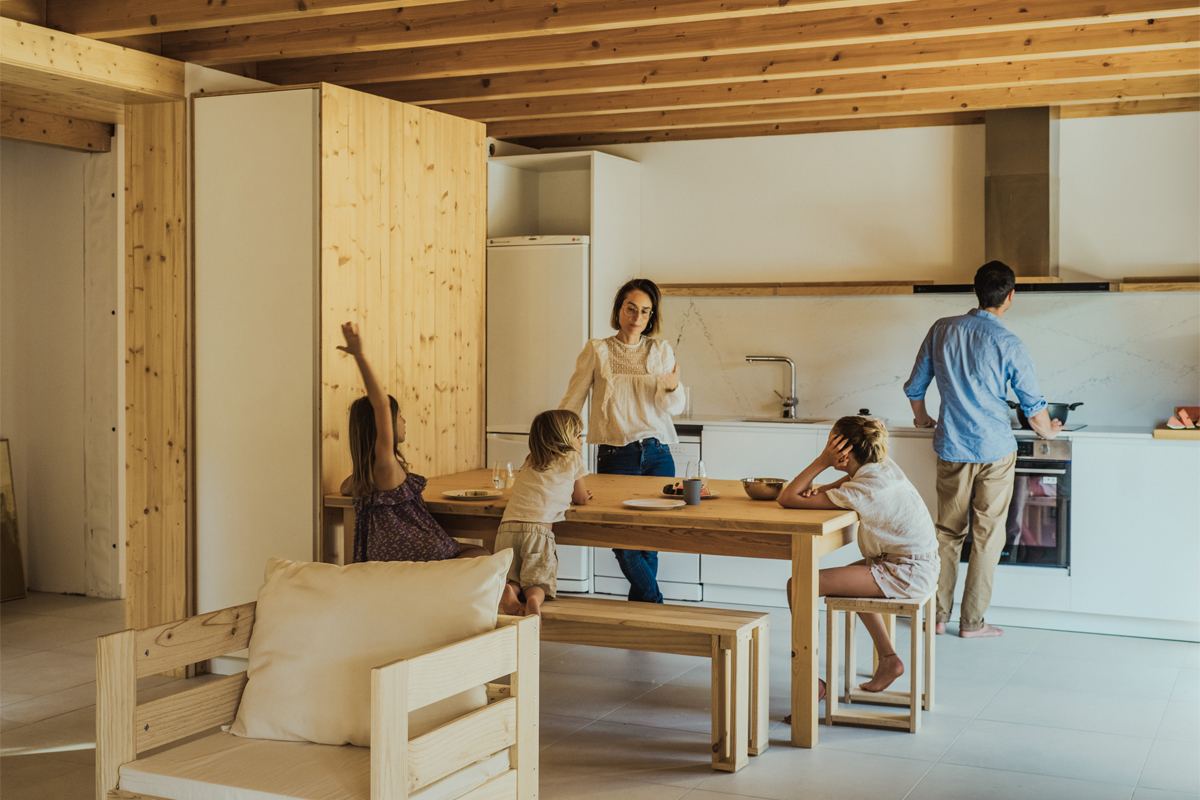
In recent years, access to housing in Spain has become significantly more complex. According to recent data from the National Institute of Statistics (INE) for 2025, the average housing price has increased by 15% in just the last two years, far exceeding the financial capacity of many families. Furthermore, the supply of affordable housing remains very limited, and the timeframes for finding the ideal home are constantly lengthening. This situation has led many people to ask a key question: is it better to buy or build a house?
Many families, who previously only considered buying an already built home, are now evaluating the possibility of designing and building their own custom house. The main reason is that they find it increasingly difficult to find a home that meets their expectations: they are not looking for large areas, but rather well-designed, energy-efficient, comfortable, and easy-to-maintain spaces. The profile of those who choose to build is a conscious client, interested in sustainability and well-being, who wants a house that heats up quickly, consumes little energy, and offers good indoor comfort—something difficult to find in homes on the regular market.
Many of the houses built in recent decades follow a pre-crisis model, where oversizing, low-quality materials, and a lack of energy efficiency criteria are the norm. This results in uncomfortable homes with high maintenance and energy consumption costs, which do not meet current needs.
Although building a custom home involves a longer, more complex process that requires greater involvement, more and more families are considering it a viable option given the uncertainty of the real estate market and the difficulty of finding the ideal home.
In this article, we will analyze the advantages and disadvantages of buying or building a house, with the focus on sustainability and health that characterizes Slow Studio, to help you make an informed decision aligned with your needs and possibilities.
Is it better to buy or build a custom home?
It is a question many people ask themselves when thinking about creating their own home, especially in the current context where real estate market conditions and family needs are changing.
In this article, we present a clear analysis of the advantages and disadvantages of buying an already built home or building a custom house. Our goal is to offer you a practical guide with the most important aspects you should consider to make the best decision according to your circumstances, priorities, and expectations.

Before deciding whether it is better to buy or build a house, it is important to know the different options currently available. There are also hybrid alternatives, such as houses with a base design that can be adapted to your needs, so it is not always black or white.
Advantages and disadvantages of building a house
Design freedom
One of the greatest advantages of custom building is the complete freedom to choose the design, layout, materials, and finishes. This allows you to create a space that truly adapts to your lifestyle, needs, and personal tastes, working hand-in-hand with the architecture team to find the most practical solution that fits your budget.
SUSTAINABILITY AND ENERGY EFFICIENCY
When building from scratch, you have the possibility to incorporate sustainability criteria from the outset. This includes the use of ecological materials, efficient insulation, design to optimize natural light and ventilation, and systems to minimize energy consumption. All of this contributes to creating a much healthier and more environmentally friendly home, something very difficult to find in existing homes without major renovations.
Participation in the design process
By actively participating in the design, you will know every detail of your future home, from the foundations to the furniture. This process can be very rewarding, as you will ultimately feel that the home is the result of your own effort and vision. Building a house is often a life project, a unique experience that many people only undertake once in their lifetime, which adds a very special emotional value.
Cost adjustment
Building also allows you to adapt the project to your budget. For example, it is possible to adjust the square meters, avoid unnecessary finishes by leaving some materials exposed and highlighting their value, or plan for future expansions, which is usually more difficult in an already built house. Furthermore, building will help you better understand the difference between the economic mortgage and the energy mortgage, because although there are upfront costs, these will allow you to avoid future maintenance costs, reduce energy consumption, and prevent health problems derived from poor indoor environment quality.
CONSTRUCTION TIME
Building a house is a process that requires time, planning, and patience. From land acquisition to project completion, the process can take between 12 and 18 months, depending on the type of construction and the project’s characteristics.
It is important to note that the time it takes to build a house can vary depending on several factors, such as design complexity, material availability, weather conditions, and administrative procedures. Therefore, it is advisable to establish a detailed and realistic timeline for each phase of the project.
Furthermore, it is essential to consider that, although the construction process may seem long, the long-term benefits of a custom-built home with sustainability criteria can far outweigh the initial inconveniences. Adequate planning and efficient execution can ensure that the final result is a home that meets all your expectations and needs.
CLIENT INVOLVEMENT
Finally, it is also important to consider that the entire process requires active client involvement in design meetings, decision-making, comparing mortgages with banks, selecting the appropriate land, etc.
We will have to make many decisions throughout the process, and we must be aware that our active participation will be necessary throughout.
Additionally, this process will require more effort, from finding the land, administrative procedures, hiring the team of professionals, or executing the work.
Advantages and disadvantages of buying a house
Less time
Buying a house is usually the fastest option to acquire a home, as it avoids the lengthy processes of design, permits, and construction. This can be especially important if you need to move urgently or do not want to face the waiting period involved in building from scratch. In fact, more and more homes are being sold off-plan, which also implies a waiting period until delivery. On the other hand, speed can also mean that you don’t find exactly what you are looking for, and the client has to adapt to what is available on the market.
Price
Buying a house may seem more convenient, but it is not always cheaper. Often, the final price is increased by the participation of intermediaries such as developers, real estate agencies, or agents, who add their commissions to the total cost. Furthermore, if the home does not perfectly suit your needs, you may need to carry out subsequent renovations or adaptations, which implies an extra expense that is sometimes not initially considered. Therefore, it is essential to carefully assess the condition of the home and set aside a portion of the budget for possible works or improvements you wish to make. Failure to do so may result in paying more than anticipated and ending up with a home that does not fully meet your expectations.
What is cheaper, buying or building a house?
This is probably the most common question for those evaluating which path to take: what is more economical, buying or building a house?
The answer is not simple, as it depends on many factors and the specific needs of each person or family.
From our sustainable architecture studio, when a client asks us, “How much will my house cost?”, we usually flip the question and ask them to tell us their budget. This is because the cost of a custom house can vary greatly depending on different aspects, among which stand out:
-
The square meters: obviously, the larger the house, the greater the investment.
-
The quality of the finishes: materials, coverings, carpentry, which can range from basic options to high-end finishes.
-
Energy efficiency: including systems or materials that reduce long-term consumption may imply a higher initial cost, but it represents considerable savings over time and improves comfort.

By balancing these parameters that we have defined throughout the article, we can increase or reduce the cost of a home. At Slow Studio, from our experience with clients, we realize that each project is unique and that each person has different priorities: some seek natural and healthy finishes, others want to minimize energy expenditure, and there are those who prefer to live in smaller spaces to avoid additional maintenance costs. Therefore, in the initial meetings, we focus on thoroughly understanding the client’s needs, rather than just discussing square meters and prices.
In this sense, the options for building a custom house are varied, and it is essential to evaluate each case in detail, ask questions, raise doubts, and adjust decisions according to the total budget. We prioritize the flexibility of spaces, aiming to create resilient homes that can adapt to future family changes.
Although it highly depends on the market situation, location, and project characteristics, building a custom house can result in approximate savings of between 10% and 20% compared to buying an existing home. However, this percentage is only a general reference and should not be taken as a fixed rule. It can also be seen not only as a saving but as a surplus that you can invest in using sustainable materials or implementing renewable energy systems.
Any option can be more or less economical depending on the decisions and priorities you make for your future home. However, the satisfaction of living in a house that aligns with your values and is designed to your specifications is priceless.
SLOW LIVING
As an intermediate alternative, Slow Studio has launched Slow Living, a new format for promoting sustainable community housing. This is a hybrid system that starts with base designs incorporating bioclimatic and health criteria, built with natural materials and aimed at zero energy consumption, but which at the same time allows families to adapt and personalize the home, participating in the process and ensuring that the home reflects their values and needs.
This model seeks to facilitate access to sustainable housing at a more affordable price, eliminating intermediaries and fostering communities committed to a more conscious and planet-friendly lifestyle. Thus, it combines the speed and convenience of buying off-plan with the personalization and commitment of custom building.