Sustainability
10 Books on Architecture, Health, and Climate Change in 2025
The Slow Studio team's annual selection
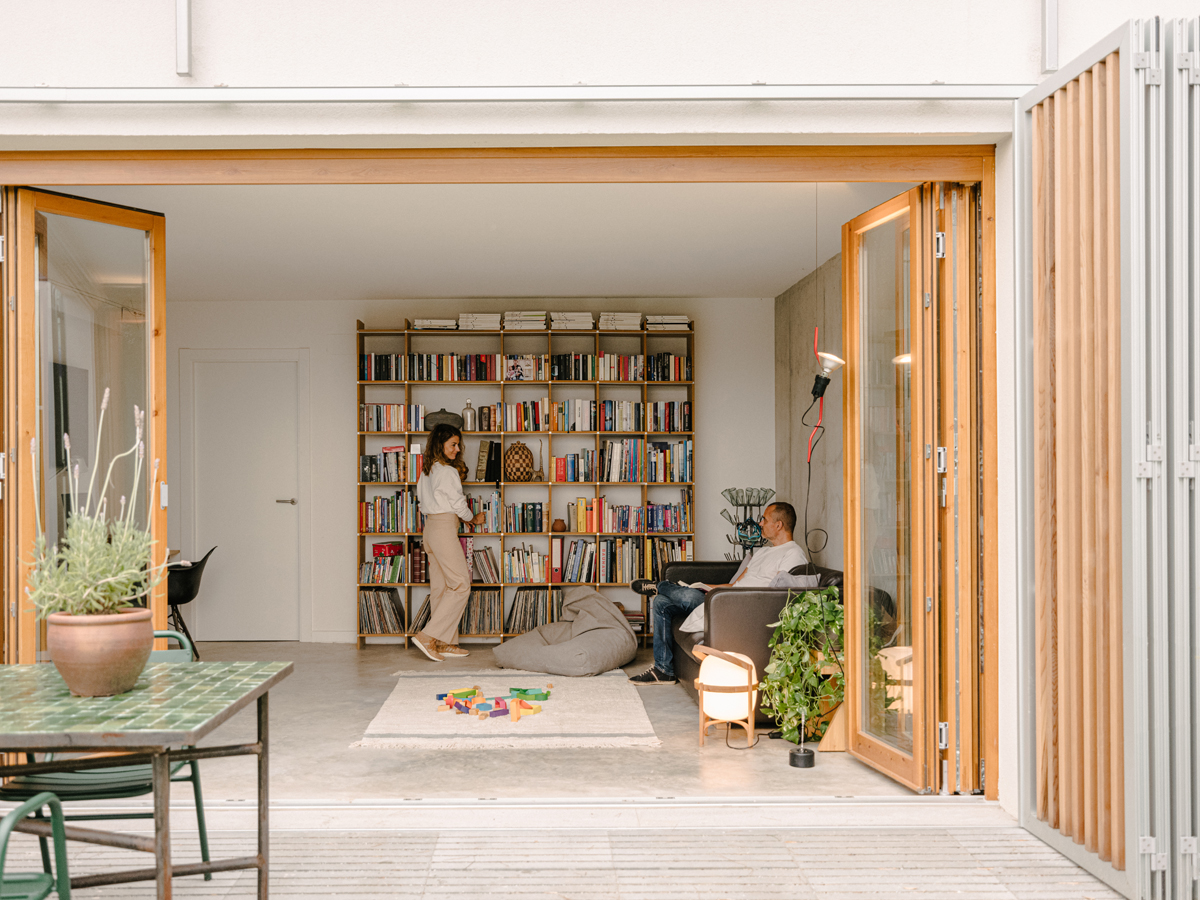
Today we share our selection of 10 readings on how architecture can contribute to improving people’s well-being and the future of our planet.
On the occasion of International Book Day, April 23, we share our selection of 10 essential readings that have inspired our team over the past year—readings that not only address architecture and urbanism, but also broaden our perspective to understand the challenges we face as a society.
Without a doubt, the climate emergency is one of the greatest challenges threatening human survival in our era, and addressing it requires collective action across all areas of our lives and in a cross-cutting manner.
1. 2050. How the World Really Works – Vaclav Smil
2. Together – Richard Sennett
3. Terra Fibra Architectures – Pavillon de l’Arsenal
4. Hungry Cities – Carolyn Steel
5. PLUS – Anne Lacaton & Philippe Vassal
6. Regeneration – Paul Hawken
7. The Dry Gardening Handbook – Oliver Filippi
8. Design with Life: Biotech Architecture and Resilient Cities – Mitchell Joachim, Maria Aiolova, Terreform One
9. The 15-Minute City – Carlos Moreno
10. Living in Community – Lacol and La Ciutat Invisible
1. 2050. How the World Really Works – Vaclav Smil
Vaclav Smil, one of the most incisive thinkers of our time, once again provokes reflection with this uncomfortable yet necessary essay. In How the World Really Works, the author rigorously dismantles many of the premises upon which promises of a rapid and clean energy transition are built.
Through a critical, data-driven perspective, Smil compels us to abandon the comfort of technological optimism and confront the complexity of the material processes that sustain modern civilization. From cement and steel production to industrial agriculture, the author demonstrates how sectors fundamental to human life remain deeply tied to fossil fuels, making radical short-term change difficult.
Far from falling into defeatism, the book issues a call to responsibility and collective maturity: while a zero-emissions world may be desirable, it will not be viable without a profound transformation of our lifestyles, consumption habits, and growth expectations.
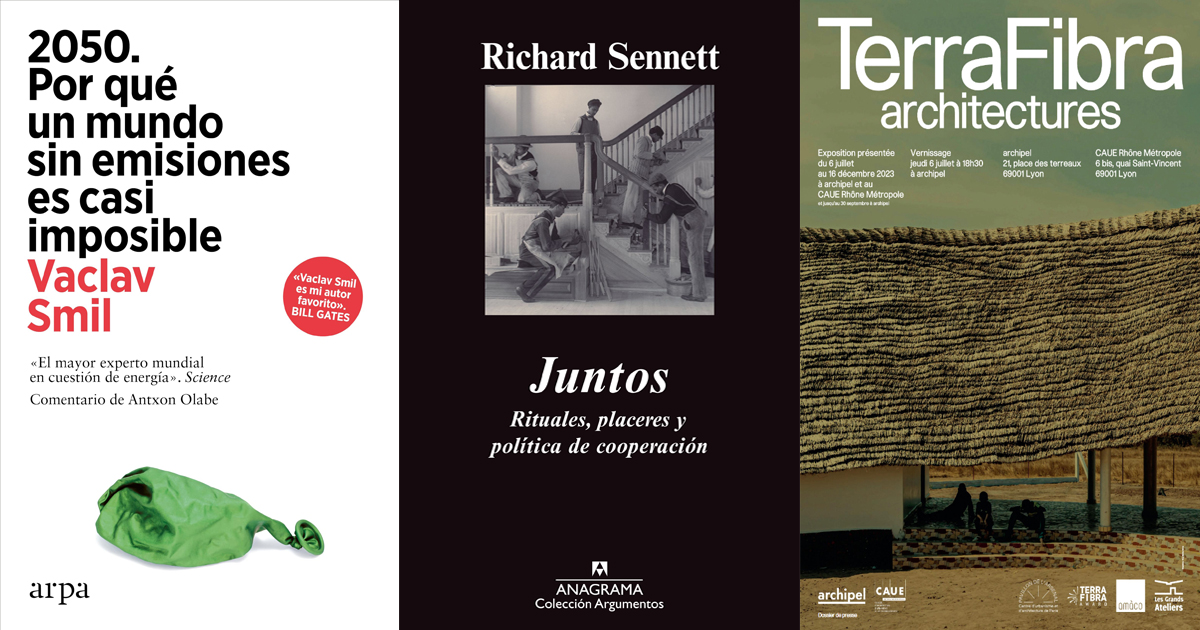
2. Together: The Rituals, Pleasures and Politics of Cooperation – Richard Sennett
In a world marked by polarization and social fragmentation, Richard Sennett offers a luminous work that reclaims cooperation as the foundation of meaningful communal life. Together is not merely a reflection on the social—it is also a map of possibilities for rebuilding human bonds through listening, empathy, and commitment.
Drawing on history, philosophy, and his own experience as a musician, Sennett shows us how cooperation goes far beyond altruism: it is an art that is learned and cultivated, a political practice that can sustain more just and resilient societies.
The author explores how we interact in everyday spaces, from the workplace to public institutions, and denounces the structures that prevent genuine encounters between people. At the same time, he proposes alternative models where difference is not eliminated but embraced as a source of collective richness.
“Cooperating does not simply mean working together. It means engaging with others in a way that respects their differences, their silences, their ways of seeing the world. It requires the willingness to accept that the other may not change, and that they still deserve to be heard. It is a difficult art, because it involves tolerating ambiguity and frustration without these turning into violence. True cooperation is neither efficient nor clean: it is messy, human, and profoundly necessary for a society to sustain itself over time.”
3. Terra Fibra Architectures – Pavillon de l’Arsenal
This catalog-book, published by the Pavillon de l’Arsenal together with amàco and CRAterre, presents a selection of the finest contemporary constructions built with earth and plant fibers worldwide. Terra Fibra Architectures is much more than a technical compendium: it is a statement of principles toward regenerative, sensory architecture deeply rooted in the territory.
In a context of climate urgency, this work highlights forgotten materials—yet available, local, and low-impact—such as adobe, rammed earth, cane, or hemp. Through built examples, it demonstrates that it is possible to create beautiful, healthy, and sustainable spaces without relying on the industrial materials that dominate contemporary construction.
Each project is a lesson on how to revive ancestral knowledge, work with the community, and conceive architecture not as a consumer object, but as an act of care toward the planet and its inhabitants.
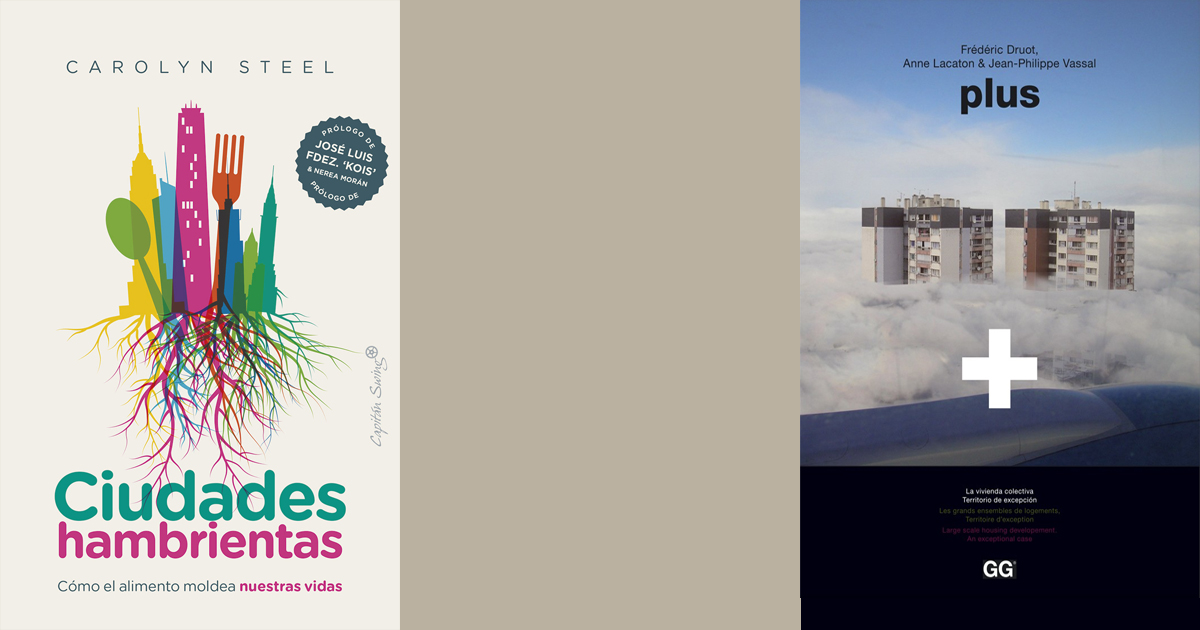
4. Hungry Cities – Carolyn Steel
What do we eat? Where does it come from? And how does it reach our table? Carolyn Steel begins with these simple yet fundamental questions to trace a complex history of how cities are fed, and how that relationship with food has shaped—and continues to shape—their structure, culture, and politics.
Hungry Cities, published in Spanish by Capitán Swing, is a work that blends urbanism, history, ecology, and philosophy to show that food is not merely a matter of consumption, but of power and planning. From medieval London to contemporary megacities, Steel explores how food flows have shaped urban space, affecting everything from market layouts to suburban growth, transportation, and public health.
In an era where globalized food systems are both efficient and extremely fragile, the author proposes recovering a more direct, fairer, and more local connection between countryside and city. Food, Steel argues, can be a powerful tool for redesigning our societies in a more equitable and sustainable way.
5. PLUS: Lessons, Projects, Buildings, and Other Fragments – Anne Lacaton & Philippe Vassal
Anne Lacaton and Jean-Philippe Vassal, recipients of the 2021 Pritzker Prize, have built a coherent, ethical trajectory deeply committed to dignified living. In PLUS, they not only compile their most emblematic projects but also share the heart of their architectural thinking: doing more with less, but without subtracting quality, space, or beauty from people’s lives.
This book is not merely a monograph of their work: it is a political statement on the value of space, comfort, and permanence. Lacaton & Vassal firmly oppose the logic of demolition as an urban strategy, and advocate for transformation as an act of respect, both for the memory of buildings and for the dignity of those who inhabit them.
Through essays, drawings, plans, and reflections, PLUS offers a generous perspective on an architecture that does not seek to impress, but to accompany; that does not want to shine, but to improve everyday life. It is a manifesto on how architecture can be both radical and sensitive, transformative and accessible.
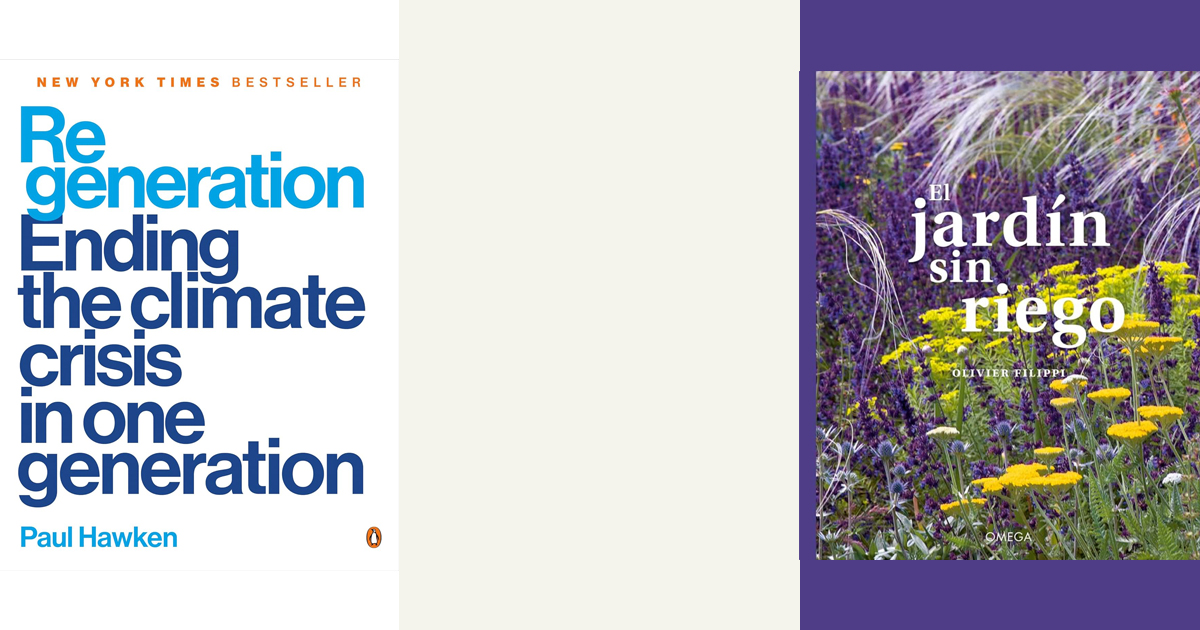
6. Regeneration: Ending the Climate Crisis in One Generation – Paul Hawken
Regeneration: Ending the Climate Crisis in One Generation offers a visionary new approach to climate change, one that weaves together justice, climate, biodiversity, equity, and human dignity into a tapestry of action, policy, and transformation that can end the climate crisis in one generation. It is one of the first books to describe and define the burgeoning regeneration movement rapidly spreading across the world—a necessary guide to inform the rapidly expanding climate movement.
Regeneration describes how an inclusive movement can engage the majority of humanity to save the world from the threat of global warming, with climate solutions that directly serve our children, the most disadvantaged, and the excluded.
This means we must address current human needs, not just future existential threats, with initiatives that include solar energy, electric vehicles, and tree planting, while also encompassing solutions such as the 15-minute city, bioregion creation, food localization, fire ecology, forests as farms, and the electrification of our built environment.
7. The Dry Gardening Handbook – Oliver Filippi
In a world where water is increasingly scarce and sustainability has become an urgent necessity, The Dry Gardening Handbook is a revealing book that offers a direct and practical response to the challenge of designing gardens and landscapes in arid conditions. Oliver Filippi, one of the leading advocates of climate-adapted gardening in the Mediterranean, shares his deep knowledge of drought-resistant plants and how to cultivate beautiful and functional gardens without the need for constant irrigation.
Filippi not only focuses on species selection but explores the entire process of creating an ecosystem that can thrive in dry environments, maximizing the use of natural resources and minimizing environmental impact. In this context, he also addresses practices such as phytoremediation, a natural water purification system that uses plants to treat and filter wastewater ecologically, without relying on chemical or technological systems. This is one of many solutions he proposes to make our outdoor spaces more sustainable and reduce water consumption.
This book is much more than a practical guide: it is a manifesto for sustainability in gardening, promoting a return to basics, to the essential, with an ecological approach perfectly suited to the climate of arid regions.
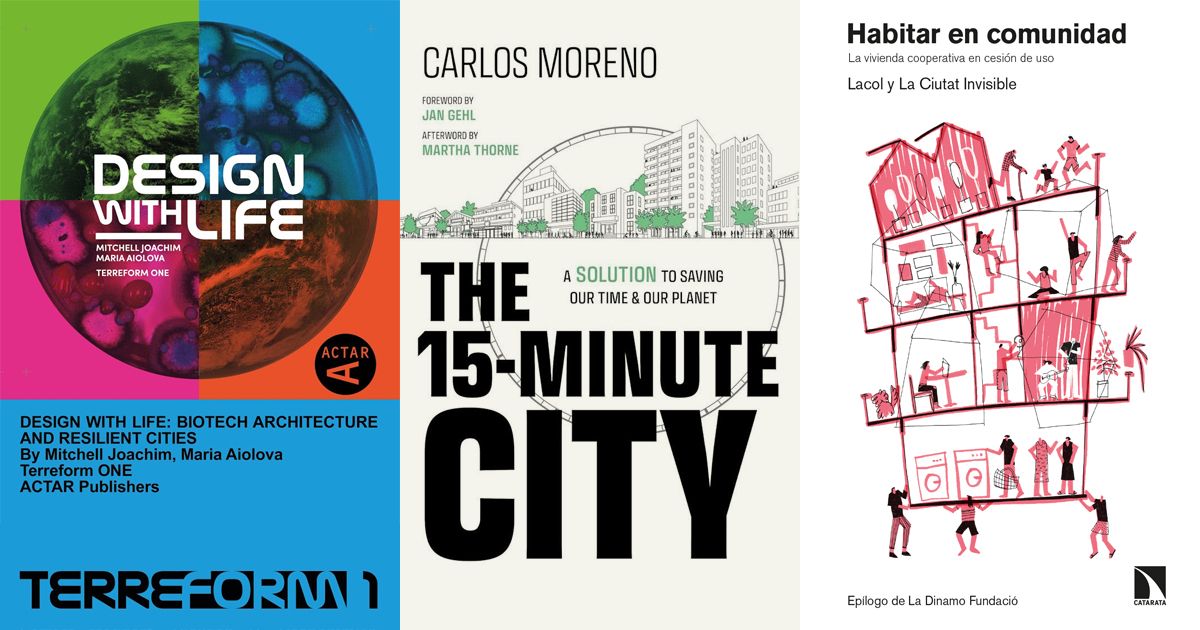
8. Design with Life – Mitchell Joachim, Maria Aiolova, Terreform One
In Design with Life, Mitchell Joachim and Maria Aiolova invite us to rethink architectural design from a perspective profoundly interconnected with life. Through a series of innovative proposals, the authors show us how architecture can be a tool for regenerating the environment, using emerging technologies and a holistic approach that centers human and ecological well-being.
The book explores concepts such as bioarchitecture and the design of buildings that not only interact with the environment but improve it, proposing structures that can purify air, generate renewable energy, or even promote biodiversity. With projects ranging from self-sufficient buildings to regenerative urbanism initiatives, Design with Life is a profound reflection on how the cities of the future can integrate with nature, rather than compete against it.
It is a text that invites designers, architects, and citizens to create a built environment that respects, enhances, and collaborates with life in all its forms.
9. The 15-Minute City – Carlos Moreno
Carlos Moreno presents one of the most revolutionary ideas for contemporary urbanism in The 15-Minute City: a city where all essential services are within a maximum of 15 minutes on foot or by bicycle. This concept not only seeks to improve urban quality of life but also to reduce dependence on automobiles, lower carbon emissions, and promote greater social equity.
Moreno explores how cities can be transformed to create more connected communities, with nearby access to health services, education, work, commerce, and recreation. Through practical examples and case studies of cities that have begun implementing these principles, the author demonstrates that it is possible to create urban environments where people can live more healthily, efficiently, and harmoniously with the environment.
A bold and much-needed proposal for the cities of the future, centered on collective well-being and sustainability.