Interview in CIC Arquitectura Magazine
In its 596th issue from September 2024, CIC Arquitectura y Sostenibilidad magazine published an interview with Jade Serra and Laia Montserrat from Slow Studio titled Towards a Healthy Home.
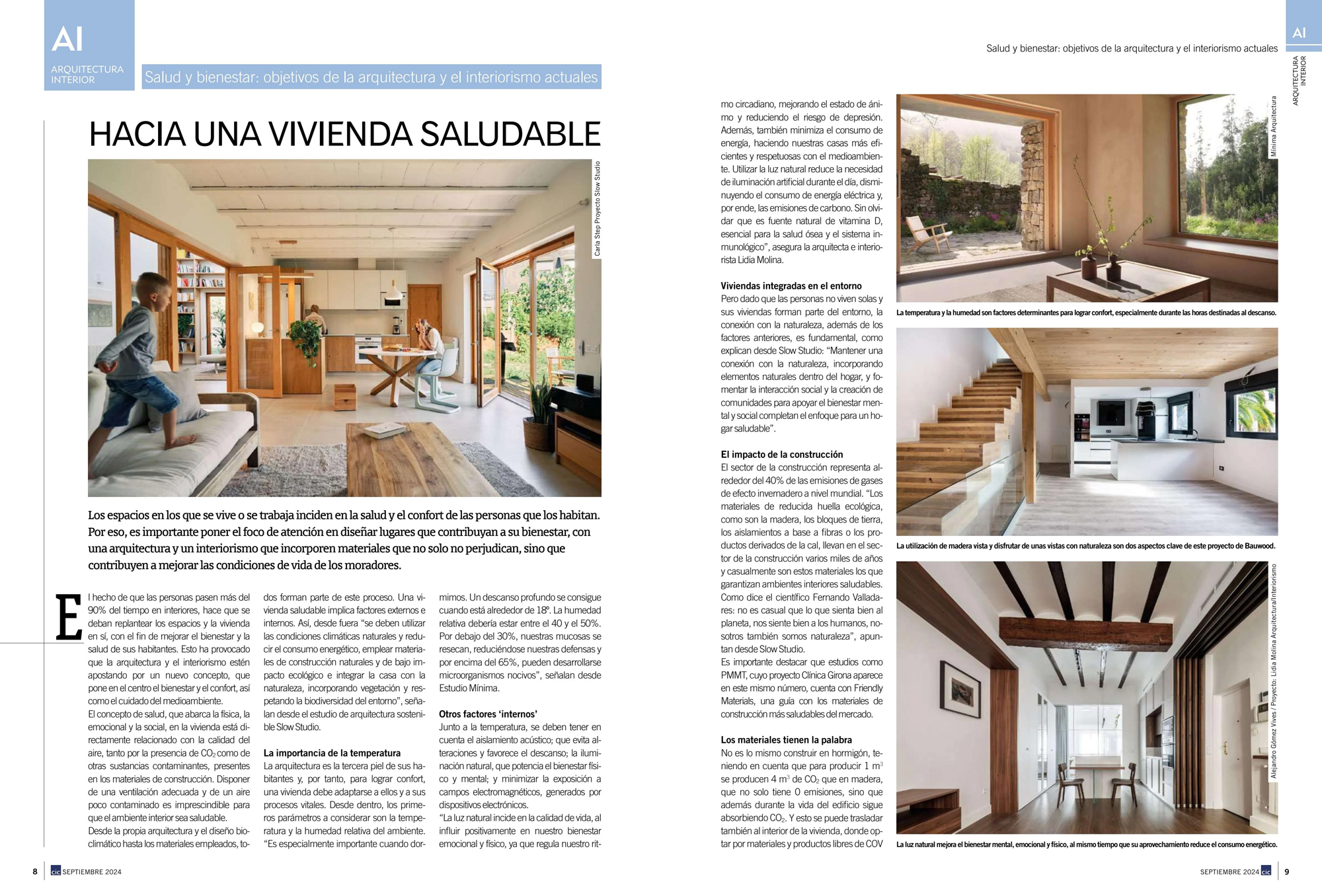
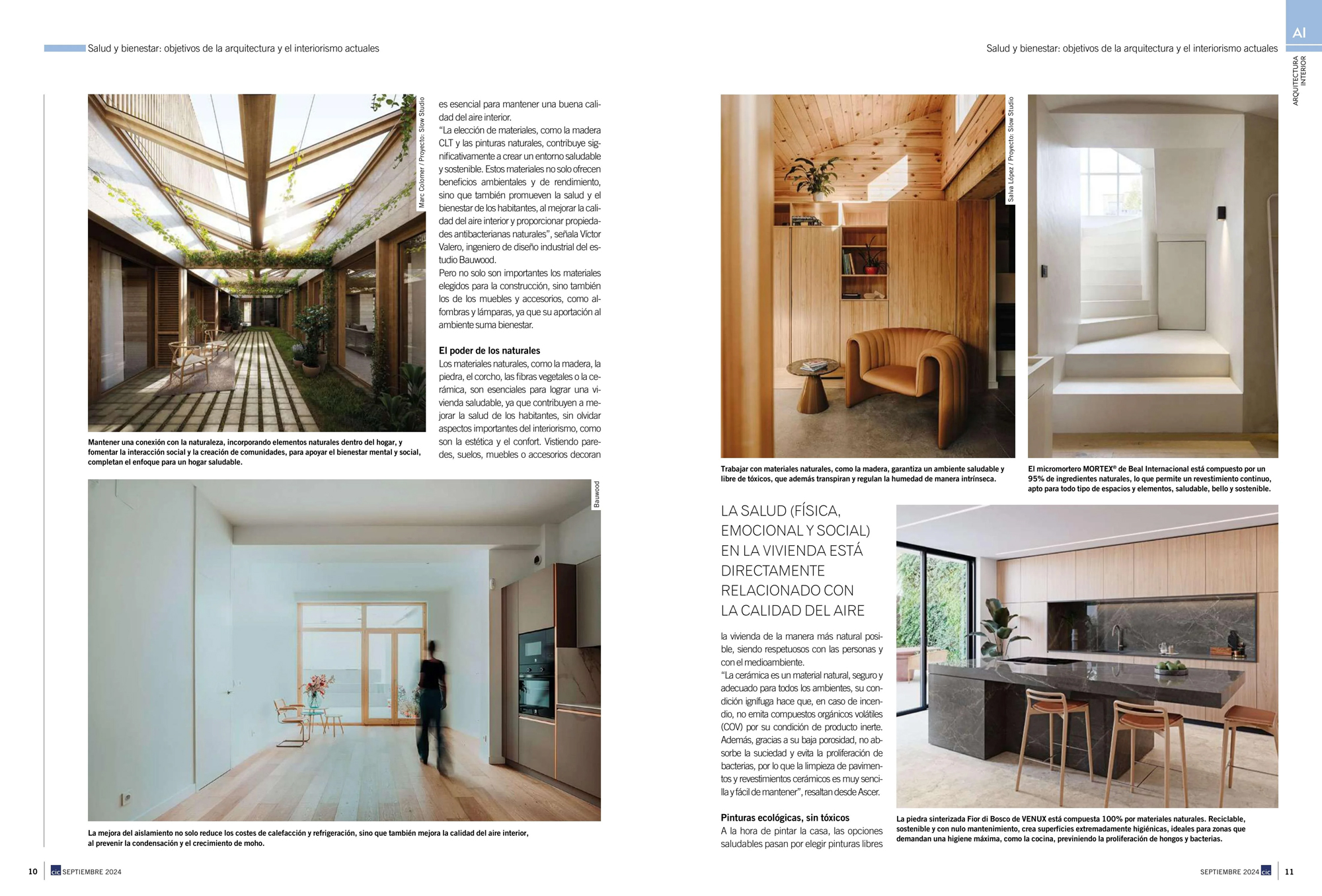
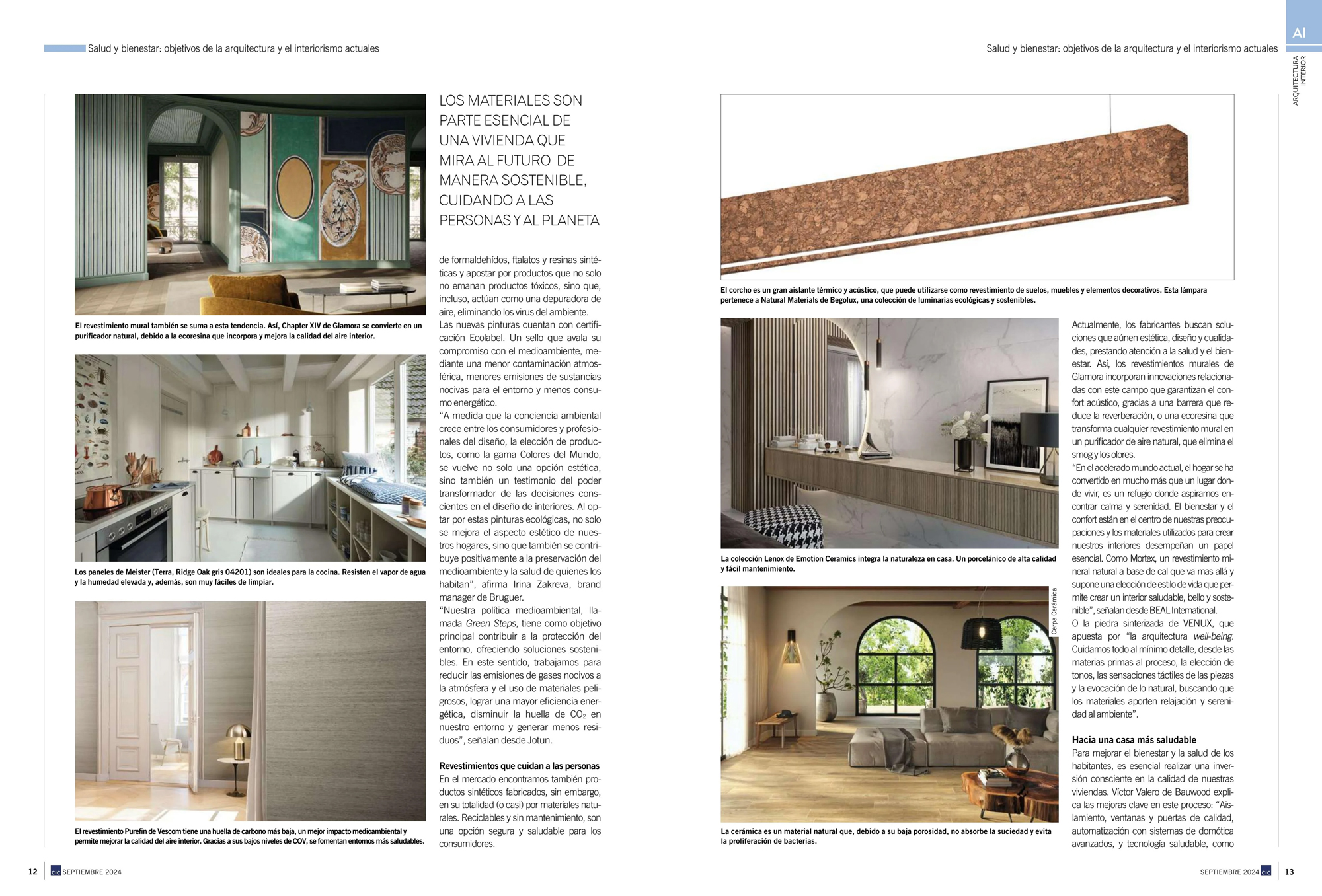
How we achieve a healthy home from the outside, but especially from the inside
The home has a direct impact on our well-being. Humans evolved in environments with natural light, clean air, and suitable climatic conditions, but we now spend 90% of our time indoors.
A healthy space focuses on 10 key factors: temperature, humidity, ventilation, air and water quality, noise, lighting, electromagnetic fields, natural environment, and community, ensuring physical, mental, and social well-being.
Achieving a healthy home involves both external and internal factors. From the outside, bioclimatic design should be leveraged to utilize natural climatic conditions and reduce energy consumption, using natural construction materials with low ecological impact, and integrating the house with nature by incorporating vegetation and respecting the surrounding biodiversity. Maintaining a connection with nature by incorporating natural elements within the home and fostering social interaction and the creation of communities to support mental and social well-being complete the approach for a healthy home.
From the inside, it is essential to maintain a comfortable temperature between 17 and 27 degrees, adapted to each space and activity, and a relative humidity of around 50% to avoid excessive dryness or mold growth. Ensuring good natural or mechanical ventilation to refresh the air and maintain low CO2 levels, avoiding internal pollutants such as VOCs, mold, and toxic cleaning products, and controlling water quality to prevent biological and chemical contaminants are equally important. Reducing external and internal noise levels to prevent disturbances to rest and well-being, providing good natural and artificial lighting that promotes physical and mental well-being, and minimizing exposure to electromagnetic fields generated by electronic devices are also key factors.
By implementing these factors, we promote comprehensive well-being and health in our living spaces.
What is necessary to achieve comfort? Is it related to air quality?
Human comfort is determined by achieving a proper balance between temperature, humidity, and air quality. The relationship between these factors is crucial for the well-being of the inhabitants.
The comfort temperature ranges between 17 and 27 degrees, varying according to the activity performed in the space. Maintaining an appropriate temperature is especially important during the night for a good rest.
Optimal relative humidity should be around 50%. An environment that is too dry can cause respiratory, eye, and skin problems, while excessive humidity can encourage the appearance of mold and bacteria, affecting respiratory health.
Air quality is directly related to comfort. It is essential to ensure good ventilation that refreshes the indoor air, avoiding the accumulation of CO2 and other pollutants. Proper renewal, whether natural or mechanical, ensures that the air is free of toxins and that a healthy environment is maintained.
These factors are interrelated and are fundamental to the physical, mental, and emotional well-being of individuals.
Which materials are recommended?
The construction sector accounts for around 40% of greenhouse gas emissions worldwide. Within this impact, we distinguish 29% of emissions derived from building energy consumption and 11% attributed to so-called embodied carbon, which are the emissions derived from the extraction and production process of materials, as well as their installation.
Materials with a low ecological footprint, such as wood, earth blocks, fiber-based insulation, or lime-derived products, have been in the construction sector for several thousand years, and coincidentally, it is these materials that guarantee healthy indoor environments. As scientist Fernando Valladares says, it is no coincidence that what is good for the planet is good for humans; we are also nature.
These materials began to take a back seat in the middle of the last century due to the rise of fossil materials—those that require the use of fossil energy (oil or coal) in their production process—such as Portland cement, steel, aluminum, or plastics.
Working with natural materials guarantees not only a healthy and toxin-free environment, but also that natural materials breathe and regulate humidity naturally.
Undoubtedly, the transition towards a decarbonized sector involves the valuation, recovery, and development of these materials, which must become the new conventional construction to ensure a sustainable future.
How we can improve the well-being and health of inhabitants
To improve the well-being and health of inhabitants, architecture must consider three essential areas that define health according to the WHO: the physical, mental, and social areas.
Physically, this is achieved through construction systems that insulate from extreme temperatures and noise, biomaterials that regulate humidity, and constant ventilation for clean air. It is crucial to avoid toxic materials and reduce electromagnetic fields to contribute to physical health.
Emotionally, spaces should be designed to promote positive emotions, using appropriate lighting, the integration of nature, and materials that favor sensory comfort.
Socially, fostering interaction and the creation of cohesive communities in residential environments is fundamental to the emotional and mental well-being of inhabitants.
You can read the full report at the following link.