Renovating for wellbeing and health in Idealista News
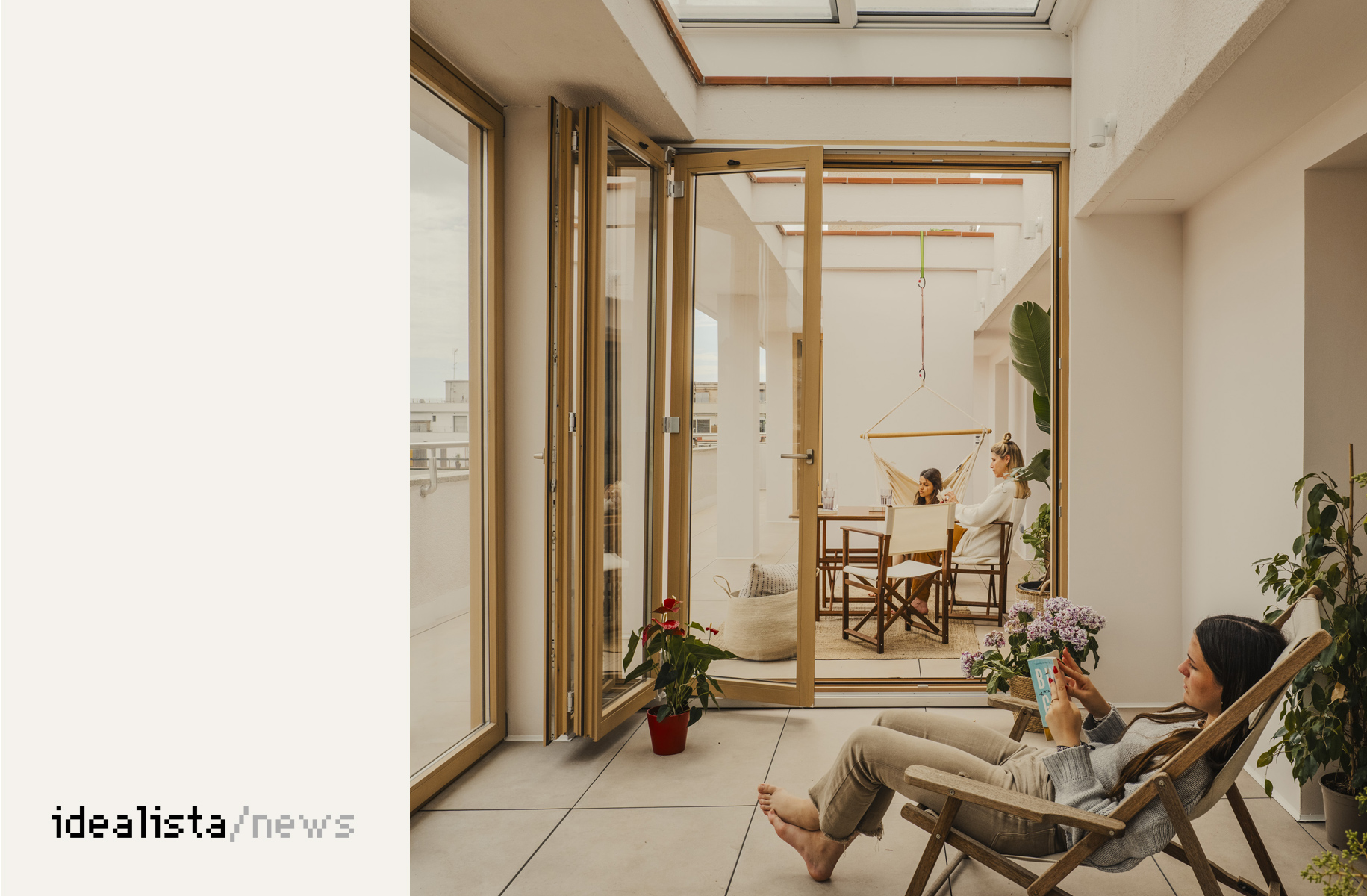
Idealista News published on October 26 the article Renovate as sustainably as possible: these are the essential professional tips, featuring Slow Studio as an expert in neuroarchitecture and sustainable renovations.
In the article, we answer a series of questions on how to approach a sustainable, healthy, and efficient renovation that contributes to people’s wellbeing and reduces a home’s environmental impact.
Why are neuroarchitecture and sustainable renovations increasingly in demand?
There is growing knowledge and awareness across all areas. Just as demand for eco-friendly products and interest in health, wellbeing, or education are increasing, so too is awareness that the place where we live directly influences our wellbeing and our health. In addition, we better understand that our decisions have an impact on the planet. For this reason, more and more people are willing to make decisions that prioritise their wellbeing, their health, and environmental care. Sometimes, these decisions may involve higher costs that many are willing to assume. At other times, it is simply a matter of choosing conscious solutions that do not necessarily make the project more expensive and that, in many cases, can be integrated within the overall investment that a renovation or the construction of a home already represents.
From eco-friendly paints without volatile compounds to natural insulation such as cork or FSC-certified wood: what is the main advantage of using sustainable and healthy materials and finishes in a renovation?
The main advantage is that they respect the health of people and the planet. At the studio, we always say that when a product with a negative impact on health or the environment is used, it is usually done to save costs or time. However, that saving is, in reality, being externalised onto future generations or onto other people who will suffer the effects of climate change and the environmental crisis. Therefore, there are two key concepts: first, that it is done for people and for the planet; and second, that those costs are not externalised. Because we are not talking about zero impact, but about shifting the consequences onto others.
Which two or three measures do you consider most effective for improving a home’s insulation and energy efficiency?
The priority should always be to orient the home towards passive performance, that is, towards reducing energy demand. It is not about thinking in terms of systems, but rather bioclimatic interventions. Improving the building envelope, ensuring greater airtightness, and increasing external insulation are fundamental measures for the home to operate while minimising the need for energy. Only after that would it make sense to incorporate active renewable generation systems. The key is to save before producing. Ensuring that the home can work with the outdoor climate, both in winter and in summer, without constantly resorting to active heating and cooling, should always be the priority. We base our approach on the principles of bioclimatic architecture: solar gain and solar protection, insulation, airtightness, thermal mass, and cross ventilation.