Energy
Home with geothermal energy
*Update: Please contact our team for current pricing.
As you know, at our firm we are strong advocates of zero-consumption construction with low ecological impact. One of the key questions raised in every project is which energy system to use. Although our homes are highly efficient, we will always need to heat water and produce electricity, and in some cases, use heating if the climate or design does not allow for comfortable temperatures through passive systems.
Therefore, a different strategy is proposed for each project. In recent months, we have evaluated several homes with geothermal energy, and we have decided to share what we have discovered regarding economic viability, efficiency, and comparison with other systems.
What is geothermal energy
As the morphology of the word geothermal itself explains, geo means earth and thermal refers to temperature. Thus, broadly speaking, we can understand that geothermal energy consists of harnessing the heat stored below the solid surface of the earth: whether in rocks, soil, or groundwater.
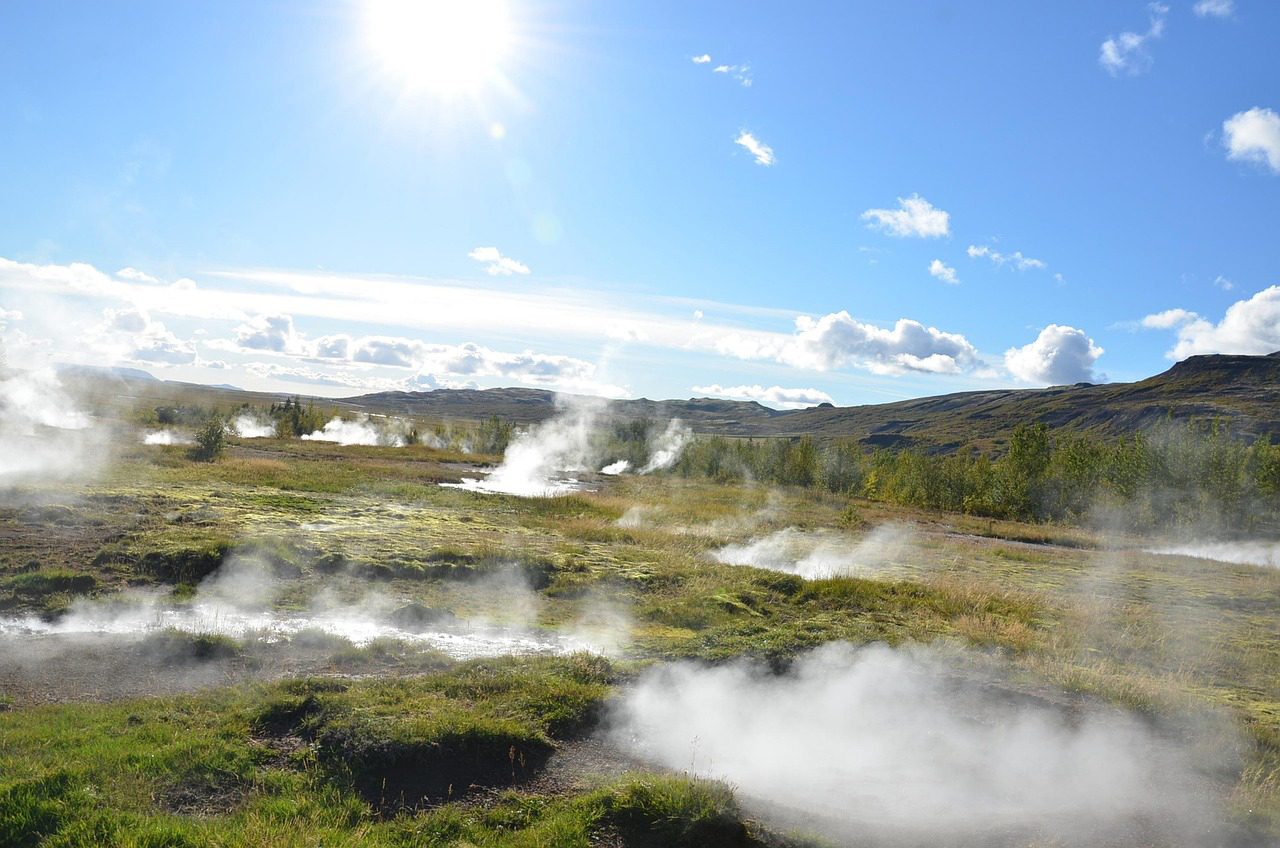
Volcanic regions are points of interior-exterior exchange in the Earth’s crust, which is why fumaroles and hot springs can appear naturally. It is known that more than 10,000 years ago, Paleo-Indians in North America were already using geothermal energy for applications such as cooking food or medicinal purposes.
Different temperatures exist depending on the location. Normally, areas of volcanic origin tend to have higher enthalpy as they are more likely to have the interior-exterior interconnection mentioned above. They are classified according to temperature: very low enthalpy (5º-25º), low enthalpy (25º-100º), medium enthalpy (100º-150º), and high enthalpy (>150º). In housing, we work with very low enthalpy to generate heating, cooling, and domestic hot water (DHW) for isolated buildings or small groups of them. Low enthalpy is applied in spas or district heating, while medium and high enthalpy are used for electricity generation.
In recent years, this clean resource has been exploited at low temperatures to power a home with geothermal energy, based on the principle that the temperature inside the earth is constant throughout the year, approximately 18 degrees at a depth of 20 meters—a temperature that depends on the percentage of granite in the ground composition.
This temperature is too diffuse to be extracted directly as in the case of hot springs, so its utilization is based on the temperature difference between this average and the exterior, which varies depending on the season and whether the climate is more or less continental.
For all these reasons, we can affirm that geothermal energy is a renewable energy found wherever we go, always beneath our feet, which also makes it a local and, most importantly, constant energy source.

Elements of a geothermal installation
For any energy installation, in this case for our future home with geothermal energy, there are three stages in the operating scheme: the collection system, the energy generation system, and the distribution system.
The collection system consists of the mechanism for extracting energy from the ground, whether through vertical or horizontal wells, or directly from groundwater sources if they are found on our site. It would be like the solar panel in the solar energy installation schemes we are more familiar with.
Secondly, the energy generation system transforms this temperature difference between the subsoil and the interior of our home into useful energy that we use for heating, cooling, and DHW.
Finally, the distribution system is the medium we use to provide these services, whether through a device or a surface in our home. It answers the question: How do I distribute the water or air that I have heated using geothermal energy? This can involve air distribution, radiant floors or walls, or low-emissivity radiators.
This installation can be classified into two types of systems: closed-loop or open-loop. A closed-loop system is one in which there is no direct exchange of fluids; instead, it consists of a refrigerant fluid that travels through pipes and transfers heat energy through them. Closed-loop systems are more efficient in this regard, as they do not require pumping to drive the liquid upward, as is the case with groundwater collection, an example of an open-loop system.
Collection systems
Vertical wells
The most widespread and efficient system for a home with geothermal energy is vertical wells, known as a vertical geothermal collection system. It is a closed circuit composed of pipes about 10 to 15 cm in diameter that reach depths ranging from 25 to 150 m—knowing that from a depth of 20 m we already obtain a constant temperature, and from there, for every 100 m we descend, it increases by 3º.
We are talking about the most energy-efficient collection system—for every 1 kW of energy captured, we generate 5 thermal kW. It has the advantage of being able to utilize the home’s foundation in the case of new construction. In fact, there are so-called ‘energy piles,’ which combine the piles used in construction with the pipes to transport the fluid. It will simply be necessary to conduct a preliminary study when excavating the boreholes to ensure the subsoil is not occupied.
Horizontal wells
Buried horizontal geothermal collection also constitutes a closed circuit, but this time it extends horizontally through the ground at a depth ranging from 0.6 to 1.5 meters. In this case, the guidelines are different, as the climate has a significant influence on this surface layer of soil. In fact, the ground acts as a solar energy accumulator, losing its beneficial constant temperature.
This is why, in terms of efficiency, this system is closer to aerothermal energy and can be quite weak in winter in continental climates, potentially depending on an alternative energy source for DHW. Again, it is a circuit of polyethylene pipes carrying water with antifreeze, the disadvantage of which is also the need for a large area of land where trees cannot be planted nor can it be built upon.
Groundwater collection
Groundwater collection is the only open-loop option, although this does not offer any advantage in terms of efficiency; rather the opposite. It involves directly utilizing underground aquifers that have constant renewal, extracting this water directly, circulating it for our benefit, and then returning it at another point. The main drawback, aside from the fact that these are very specific locations, is that we will need the help of a hydraulic pump for its propulsion, which in turn consumes electricity.
Furthermore, in some cases, this system may require a special permit from the water resources authority of our region.

Energy generation systems
Heat pumps
The heat pump is a key and indispensable component of any home with geothermal energy; it is responsible for taking the heat we have obtained through the wells and transferring it to the climate control system. As indicated before, direct uses can only exist if the ground is above 100º, a situation we will not cover in this article.
Broadly speaking, it is thermal equipment that uses the refrigeration cycle of a refrigerant to absorb heat from a hot source and release it to a cold source through a closed circuit. Thus, it is not that we use the earth’s heat directly to generate thermal energy for our home—we wouldn’t achieve much with 18º—but rather we rely on a change in enthalpy, the temperature difference between the interior of our home and the depth of the subsoil we have reached.
Therefore, the operation is reversed from summer to winter: in winter, the heat pump transmits heat to the home, while in summer, we cool the home by releasing heat into the ground. In this sense, in summer it works similarly to a refrigerator. A refrigerator does not generate cold itself, but rather takes the heat from inside and expels it so that food is preserved in a cold environment, that is, in the absence of heat.
The heat pump is usually followed by a buffer tank to accumulate DHW that we can use directly or in various distribution systems, as well as an expansion vessel that serves to regulate the increase in cold water volume in the case of the cooling circuit.
Today, heat pumps meet a wide range of energy demands, from the 2-4 kW that a minimal passive single-family home with geothermal energy might require, to 1400 kW pumps used for entire residential buildings, with integrated buffer tanks. Another recent invention is heat pumps that avoid the need for a buffer tank, whether integrated or not, as they manage to modulate their capacity and anticipate demand, thus avoiding the constant starting and stopping of conventional heat pumps.
All in all, we are talking about machinery that, in the case of a single-family home, does not require dimensions larger than 1.5 m x 1.5 meters, plus the advantage that the rest of the collection installation remains buried and is therefore imperceptible. What is recommended is some ventilation for the machinery, even though it generates neither odors nor gases.

Distribution systems
Low-emissivity radiators
Regarding distribution systems, we must keep in mind that we work with maximum temperatures around 55º, which differs significantly from the temperature peaks reached with gas, the system we are accustomed to. Therefore, conventional radiators do not work, and we must replace them with low-emissivity radiators.
This is a much more expensive device than a conventional radiator, but it works very efficiently with low-temperature water. The result is that it distributes heat in the home much more homogeneously, eliminating cold spots.
Radiant floor or wall heating
Broadly speaking, this is a heating system that also allows for cooling, using one of the surfaces of a space as a heat emitter/collector; whether it be the floor, walls, or ceiling, with the floor being the most common.
We must consider that bioclimatic principles are based on using the inertia of dense floors or walls to accumulate heat, so the installation of radiant floors or walls implies a loss of density that negates this option. This can be solved by alternating between accumulating surfaces and installation surfaces.
Air distribution
Geothermal energy, like aerothermal energy, allows for both water and air distribution systems. Both the radiators and radiant surfaces we have described work with water at a maximum temperature of 55º. Air distribution consists of a device called a Split, which includes an air conditioner with a heat pump.
The only drawback is in terms of health, as it dries out the environment by excessively reducing relative humidity. Below 30%, this is unhealthy for the user, drying out mucous membranes and consequently reducing defenses. This same sensation we might have with excessive air conditioning in public places in summer extends to heating.
Additional energy system
A home with geothermal energy covers all climate and DHW needs constantly, as the weather will not influence our energy source depending on the time of year, as is the case with aerothermal energy.
However, geothermal energy is only capable of generating thermal energy, so we need to ensure an additional energy system to meet our home’s electricity demand. Following the logic of renewable energies, it is most common to install solar panels for this purpose, to which we will connect the geothermal heat pump. Another option is to connect directly to the electrical grid.

Operation of a home with geothermal energy
As we have been explaining, a geothermal installation has a reverse operation in summer and winter, the process of which we will detail below for vertical collection, the most efficient and widespread method.
Heating in winter
Broadly speaking, in winter we capture the heat obtained from the subsoil, which passes to a heat pump where its pressure and temperature are increased to then be used in the home for heating and DHW.
It all starts with the heat-carrying liquid, water with antifreeze, which travels through the installation’s probes starting at a low temperature of approximately 5ºC. After circulating through the wells, it returns to the heat pump, specifically to the evaporator, at a slightly higher temperature, between 12 and 16ºC. As its name suggests, the evaporator converts this liquid into a gas, which is still cold. This is drawn in by the compressor and compressed to increase its pressure and temperature—it becomes a gas at a temperature of approximately 75ºC.
This hot gas reaches the condenser, which is the element responsible for transferring the heat produced through the heat pump to the heating system or the hot water generation system, working with water at maximum temperatures of 55º. As a large part of the heat is transferred for use in the home, the gas cools down again and is passed through an expansion valve that decreases its pressure and temperature, leaving it ready to start the cycle again.
Cooling in summer
In summer, the system absorbs heat from the interior of the home with geothermal energy and transmits it to the heat pump, which releases it to the ground, thereby cooling the interior rooms—for example, through a cooling floor.
In the case of a cooling/radiant floor, the heat-carrying liquid travels through the room’s installation, which can easily reach a temperature of 30º. Similarly to before, this liquid heats up and reaches the heat pump with its operation reversed compared to heating mode. The process is the same—evaporator, decompressor, condenser—but the difference is that the condenser releases the heat to the ground instead of the home.
In some pumps, this reversal of operation is performed only in the hydraulic part, maintaining the pump’s operation in heating mode and simply diverting the hot fluid from the heat pump to the ground and the cold fluid to the home.
In the Iberian Peninsula, the ground temperature is normally between 16 and 22ºC, so in many cases, a direct exchange with the ground, without the participation of the heat pump, is sufficient to cool a home. This operation is known as Passive Cooling or Free-Cooling. Efficiency in these cases is very high, as energy expenditure is reduced to the operation of the circulation pumps from the collection system to the distribution system.
Profitability of a home with geothermal energy
Among all renewable energies, a geothermal energy installation requires the highest initial investment, which is why it is very important to evaluate profitability in the medium and long term to see if it will pay off in your case. Therefore, it is optimal in cases where energy demand is very high, such as large homes or when needing to heat a swimming pool, as well as hotels or farmhouse renovations.
Today, building a home with geothermal energy requires an average investment of between 20,000 and 30,000 euros, depending on the home’s energy demand and the characteristics of the land where it is located. This means the installation of this system is calculated with a payback period of about 7 years. Its greatest advantage is that it is the most durable installation among all renewable systems, lasting up to 50 years with minimal maintenance costs, as there is no need to touch the pipes.
Another economic disadvantage is that the energy cannot be transported, and therefore cannot be sold. However, there are alternatives such as reaching an agreement with neighbors to propose centralized geothermal energy, or regional subsidy options. It should be noted that geothermal energy is the least widespread renewable option, even though in the Geothermal Potential of Spain map, generated by the International Renewable Energy Agency, we find very low enthalpy potential—that is, for domestic use—in Madrid, the Basque Country, Navarre, Andalusia, and Catalonia.
Geothermal installation budget in A SINGLE-FAMILY HOME
Below, to rely on real and objective data, we have budgeted aerothermal and geothermal installations for a project from our firm, the House in Sant Celoni, with the aim of comparing both systems. It is a two-story home with a total of 220 m2 located in Sant Celoni, in the north of the province of Barcelona. It is based on a simple and effective scheme: a two-story volume where the day areas are located on the ground floor and the night areas on the upper floor, connected by the access and services core.
Installation costs of a home with geothermal energy for a single-family house
For the geothermal installation, it will be necessary to install a geothermal heat pump along with a storage tank (€15,000-€30,000), two geothermal collection probes (€5,000), an alternative photovoltaic installation (€7,000), and a distribution system, in this case, radiant flooring.
This is a heat pump that integrates a smart home control system by room, in which the user can choose three temperature ranges and different time slots for each of them.
Furthermore, it allows for the control of domestic hot water loads and recirculation. Another advantage is that it integrates with photovoltaic production, and when there is a surplus in the home, the heat pump utilizes it and transforms it into thermal energy.
The final budget is €32,000, to which VAT must be added. This will be 21% if the installation is added to an existing home, bringing the total to €38,720. Otherwise, if we build the home with the installation already integrated, by doing so through the builder, the VAT will be 10%, totaling €35,200.
Installation costs of an aerothermal system for a single-family home
On the other hand, the aerothermal installation includes an aerothermal heat pump with a storage tank (€15,000-€30,000), with a data management system and an outdoor temperature probe, as well as the alternative photovoltaic installation (€7,000) and the same radiant floor distribution system.
The final budget is €27,000, which with 21% VAT rises to €32,670; and with 10% VAT, €29,700.
Comparison between aerothermal and geothermal installation
Comparing these two specific cases, we see that geothermal energy is approximately 15% more expensive than aerothermal energy, and the difference lies in the need to excavate two probes for heat collection. It is difficult to make a direct aerothermal-geothermal comparison since each case is a specific situation and must be evaluated independently.
We can simply state that in terms of economic investment, in locations near the coast with temperate climates, the weather is already constant enough for aerothermal energy to win the price-efficiency ratio.

Advantages of a home with geothermal energy
In conclusion, we want to highlight a series of advantages that geothermal energy offers and that are always worth remembering. First and foremost, its strong point must be highlighted: stability. It produces energy regularly 24 hours a day, every day of the year, without being affected by the weather, making it highly suitable for continental climates.
A consequence of this is its proliferation in Madrid, where it is no longer just an economic issue, but rather that it works in winter, unlike aerothermal energy, which ends up depending almost entirely on an alternative energy source.
Other benefits include the possibility of installation in already built homes or centralizing with neighbors, as well as the fact that it does not aesthetically affect the home because it is buried.
At our firm, Slow Studio, we work on all our projects with renewable and clean energies with the goal of reducing energy consumption and minimizing environmental impact; however, it is necessary to evaluate each case and each need to decide whether to use one energy source or another, or a combination of several.
If you are thinking of building a home and want it to be efficient, do not hesitate to consult us so we can evaluate the overall costs and especially the viability of different energy efficiency systems. You can also contact us if you have questions about how to build a home with geothermal energy and its profitability.