Conclusions from the EPBD Conference
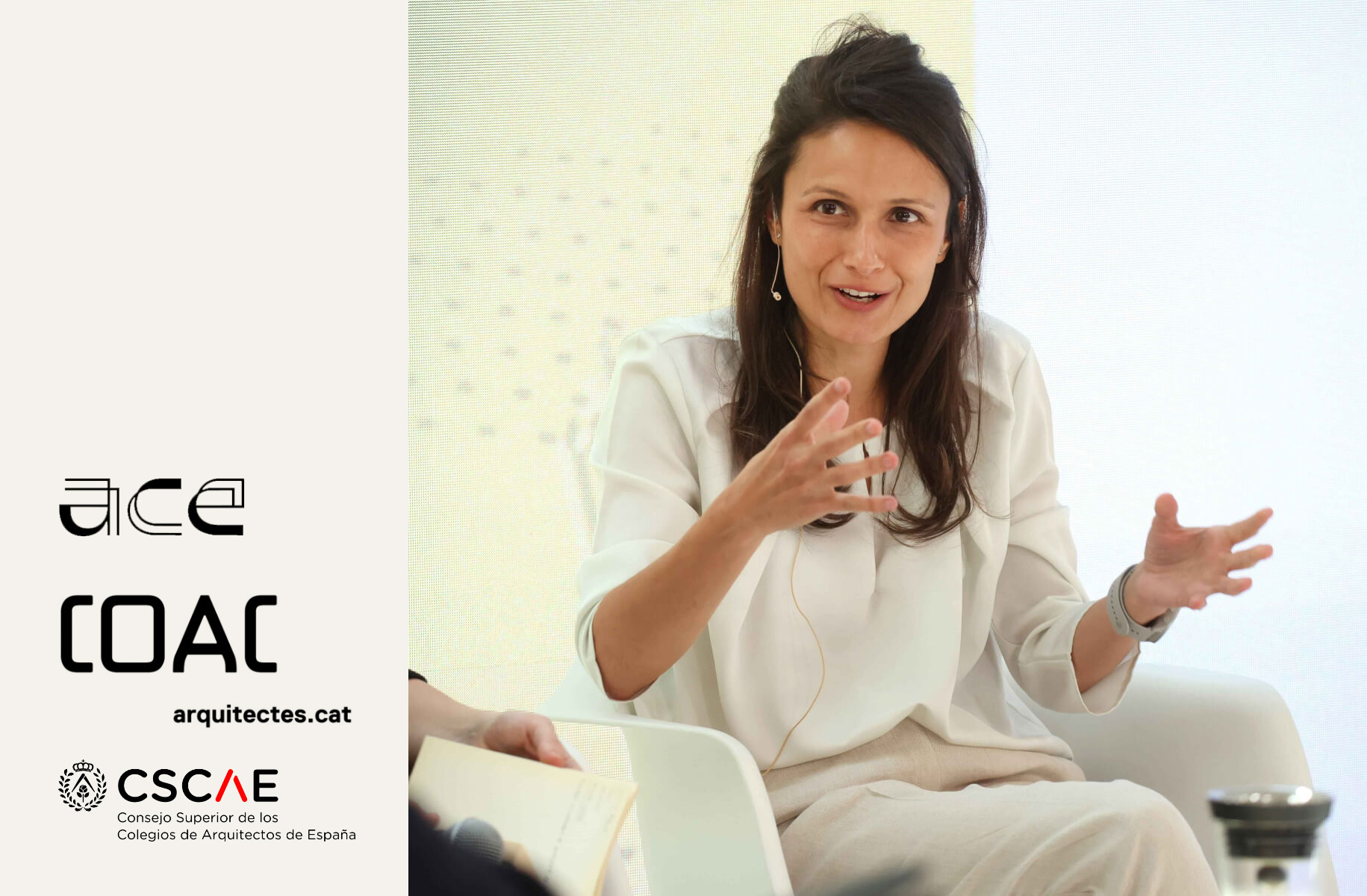
On May 10, a conference was held at COAC regarding the publication of the new European Union Energy Performance of Buildings Directive, the EPBD, which for the first time includes the calculation of Global Warming Potential (GWP) in new construction buildings.
This calculation will be mandatory from 2028 for public buildings, and from 2030 for all other buildings, and represents a paradigm shift for the sector, in the sense that from now on it will be mandatory to declare emissions in buildings.
For this reason, our partner Jade Serra participated as an expert in a roundtable discussion, which also included Greta Tresserra, Sustainability, Innovation and International representative of COAC; Licinio Alfaro, head of the Sustainable Construction department at ITeC; Albert Cuchí, professor at ETSAV-UPC and president of AuS; Còssima Cornadó, professor at ETSAB-UPC and rehabilitation expert; moderated by Andrea Sassi, communications director of Arquitectura en Corto and member of AuS.
Our partner Jade Serra referred to the new paradigm that this new Global Warming Potential calculation represents for architects, highlighting:
The materials we have been using for the last 100 years, with which most of us are accustomed to building, are materials whose production is based on fossil fuels.
This CO2 that we emit when we build with industrialized materials is not free, but rather becomes a burden both for the environment and for future generations.
With the arrival of the new EPBD, the playing field is beginning to level between these fossil materials—or incorrectly termed conventional materials—and bio-based materials.
These new rules of the game mean that we, as architects, will no longer only work with a budget in euros, but will also work with a carbon budget, and just as when you exceed your budget in euros you cannot build, when you exceed your carbon budget, there will also be a construction limitation by regulation.
And this is where our new role as architects comes in, and for this we must start from the basis that carbon is not only about materials, choosing a fossil material or a bio-based material. There is much more.
More than 50% of a building’s carbon can be reduced in the preliminary design phase, before starting construction, through the planning of compact designs that maximize usable square meters, applying energy reduction strategies through passive systems, using bio-based materials with reduced environmental impact, incorporating circularity and material recovery strategies, among others.
Participation in this conference is part of our studio’s commitment to climate action and the promotion of decarbonization in the architecture and construction sector.